
Blogs & Events
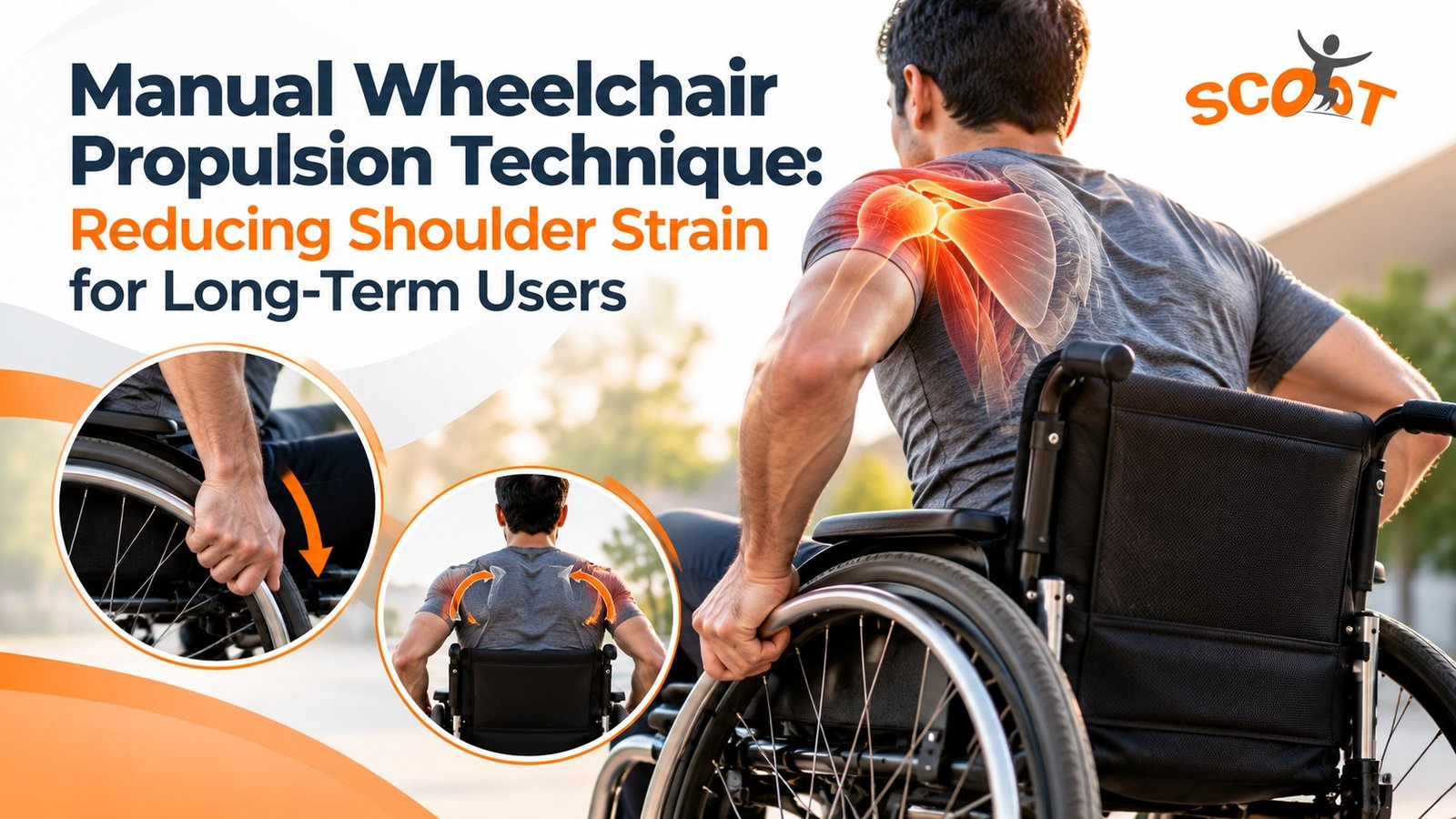
Manual Wheelchair Propulsion Technique: Reducing Shoulder Strain for Long-Term Users
Do your shoulders feel tired before you reach the end of a wheelchair trip? Daily self-propulsion asks a lot from the upper body. The same shoulder joint handles pushing, transfers, lifting and many ordinary tasks, so repeated strain can build over time.
A better manual wheelchair propulsion technique can make each push more efficient. Hand position, push length, posture, rear-wheel placement and the chair itself all affect how hard your arms need to work.
This becomes especially relevant for long-term users in India. Outdoor routes may include steep ramps, broken paving, narrow access points and sideways slopes. Good wheelchair shoulder pain prevention therefore starts with reducing avoidable effort before soreness begins changing your routine.
Improving Manual Wheelchair Propulsion Technique for Easier Daily Movement
Wheelchair propulsion depends on more than arm strength. A strong user can still waste energy through a poor push pattern, while a well-positioned user may cover the same distance with fewer strokes.
That is where ergonomic wheelchair propulsion becomes useful. Instead of focusing on force alone, it looks at how your hands contact the rim, how far each push travels, how your body stays supported and how the wheelchair responds.
Use Longer Push Strokes Instead of Repeating Short Ones
Very short pushes increase stroke frequency. Your shoulders then repeat the same movement many more times across one corridor, road or campus route.
Try to contact the push rim earlier and continue through a comfortable forward stroke. Your hands can then return in a smooth semicircular path. Do not pull the arms too far behind your body, since excessive shoulder extension may create discomfort.
A 2026 study involving 20 manual wheelchair users with spinal cord injury compared pushing with pulling propulsion. Pulling produced longer propulsion time, greater shoulder and elbow movement, and stronger activation of posterior upper-limb and trunk muscles. Conventional pushing depended more on the anterior shoulder muscles.
For proper wheelchair pushing technique, the point is simple. The length and direction of each stroke change which muscles carry the workload.
Improve Hand Contact on the Push Rims
Good rim contact gives you more useful movement from every stroke. If your hands meet the rims too far forward, you lose part of the push. If they start too far behind, the shoulder may move into a position that feels forced.
Keep your wrists close to a neutral position wherever possible. Then release the rims after the power phase instead of gripping through the recovery movement. That small habit can cut wasted hand effort during longer journeys.
Scoot also explains how propulsion demands differ between powered and manual mobility in its guide to power wheelchairs versus manual wheelchairs.
Avoid Rapid, Short Pushes on Easy Surfaces
Quick short pushes may help during sudden starts. Using that style across every smooth surface, however, increases the number of shoulder cycles you complete. On an even floor, use controlled strokes and allow the chair to roll between pushes. You do not need to keep your hands on the rims every second.
This supports wheelchair shoulder pain prevention during longer indoor journeys, office corridors, colleges and hospitals. It also saves arm effort for slopes, rough sections and turns.
Keep Your Pelvis and Trunk Supported
Your upper body cannot push efficiently when the pelvis keeps sliding forward. The same problem appears when the trunk leans repeatedly towards one side.
Start with the seating base. Seat depth should support your thighs without pressing behind the knees. Footrests should keep the legs supported without lifting the knees too high. Your backrest should give support while leaving enough room for shoulder movement. A cushion also affects propulsion height. If it raises you too far above the wheels, reaching the push rims may become harder.
Scoot covers posture, seating and everyday mobility choices in its guide to mobility aids for daily independence.
Check Rear-Wheel Position Before Blaming Your Arms
Rear-wheel position changes how much shoulder movement each push requires. If the wheel sits too far behind you, your hand may struggle to reach enough of the push rim.
Moving the axle forward can improve rim access for some users. Yet this change may also reduce rearward stability. For that reason, a trained wheelchair professional should assess axle changes rather than relying on guesswork.
A well-fitted chair supports manual wheelchair propulsion technique by reducing wasted reach. Seat height, frame size and axle position should suit your body and daily use.
Use a Different Strategy on Slopes and Uneven Ground
Outdoor wheelchair travel rarely happens on a perfectly level surface. A sideways slope can make one arm work harder simply to keep the wheelchair travelling straight.
A 2026 study on path cross-slopes found that manual wheelchair users needed asymmetrical arm propulsion to maintain a straight path across a sideways incline.
So equal effort from both arms is not always possible. One side may need corrective force while the other controls direction. Where you have a choice, flatter pathways can reduce this extra work.
This is another part of ergonomic wheelchair propulsion. Route choice can affect shoulder load just as much as hand technique.
Give Your Shoulders Short Recovery Periods
Long-distance pushing can fatigue the muscles around the shoulder blade and upper arm. Short breaks can interrupt that repeated load before it turns into heavy fatigue.
A physiotherapist may suggest mobility, strengthening or flexibility work depending on your diagnosis and joint range. Exercise should match the user rather than follow one general routine.
Sports wheelchair design also shows how frame setup and wheel position influence active propulsion. Scoot explains these points in its sports wheelchair features guide.
How Wheelchair Fit Can Reduce Shoulder Pressure Over Time
A poor wheelchair fit can make a good push technique much harder to maintain. If the seat is too wide, the trunk may move from side to side. If the rear wheels are difficult to reach, the shoulders may work through a larger range on every stroke.
Fit Area | What to Check | Possible Propulsion Effect |
Seat width | Support without excessive side space | Better trunk stability |
Seat depth | Thigh support without pressure behind knees | More stable pelvis |
Rear axle | Comfortable access to push rims | Less excessive shoulder reach |
Backrest | Support without blocking arm movement | Freer shoulder movement |
Footrests | Stable foot position and suitable height | Better lower-body support |
These adjustments can improve proper wheelchair pushing technique, although no single setup suits every user. Diagnosis, joint range, strength, skin risk and home conditions should guide the final configuration.
Signs Your Manual Wheelchair Propulsion Technique May Be Straining Your Shoulders
Shoulder trouble often develops slowly. You may first notice that one arm tires earlier. Later, transfers become uncomfortable or reaching above shoulder height starts to hurt.
Other warning signs include pain after longer pushing sessions, shorter travel tolerance and changes in your push pattern.
A wheelchair user's shoulder injury can also cause compensation. You may shorten the stroke on one side, twist the trunk or rely more heavily on the opposite arm. That can move extra workload to another joint.
Persistent symptoms deserve a clinical review. A physiotherapist, rehabilitation clinician or wheelchair specialist can check movement, seating and wheelchair setup together.
Scoot Wheelchair Options for Long-Term Manual Wheelchair Users
We use an assessment-led approach to wheelchair selection. Our team looks at diagnosis, range of motion, skin risk, home access, workplace needs and everyday travel before recommending equipment.
We operate as the specialist wheelchair, seating and mobility-aid division of Ktwo Healthcare Pvt. Ltd. and has worked in the wheelchair and mobility sector since 2018.
Its support includes:
- Custom-built wheelchair solutions, ultralight models and drive-assist options for different mobility demands.
- Seating products such as cushions, backrests and positioning supports, along with trials, consultations, spare-parts support and manufacturer-backed warranty terms.
We also work with standard, ultralight, sports and powered wheelchairs. This gives users more room to compare manual propulsion with assisted or powered movement when repeated pushing becomes difficult.
BREEZY Style for Lightweight Self-Propulsion
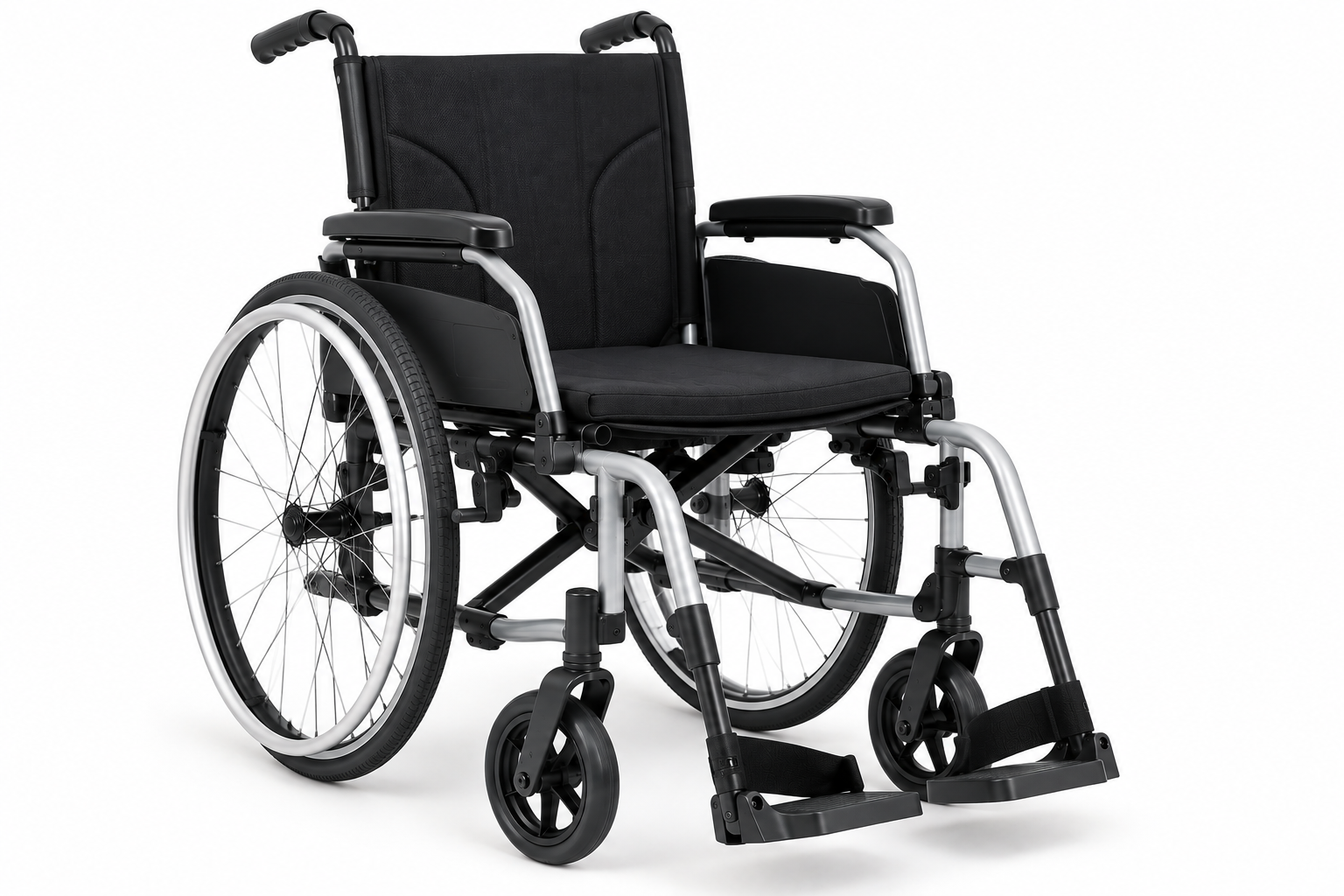
The BREEZY Style suits users looking for a lighter manual wheelchair for regular travel. A lighter frame may reduce the force needed during starts, turns and handling.
BREEZY 90 for Folding and Everyday Transport
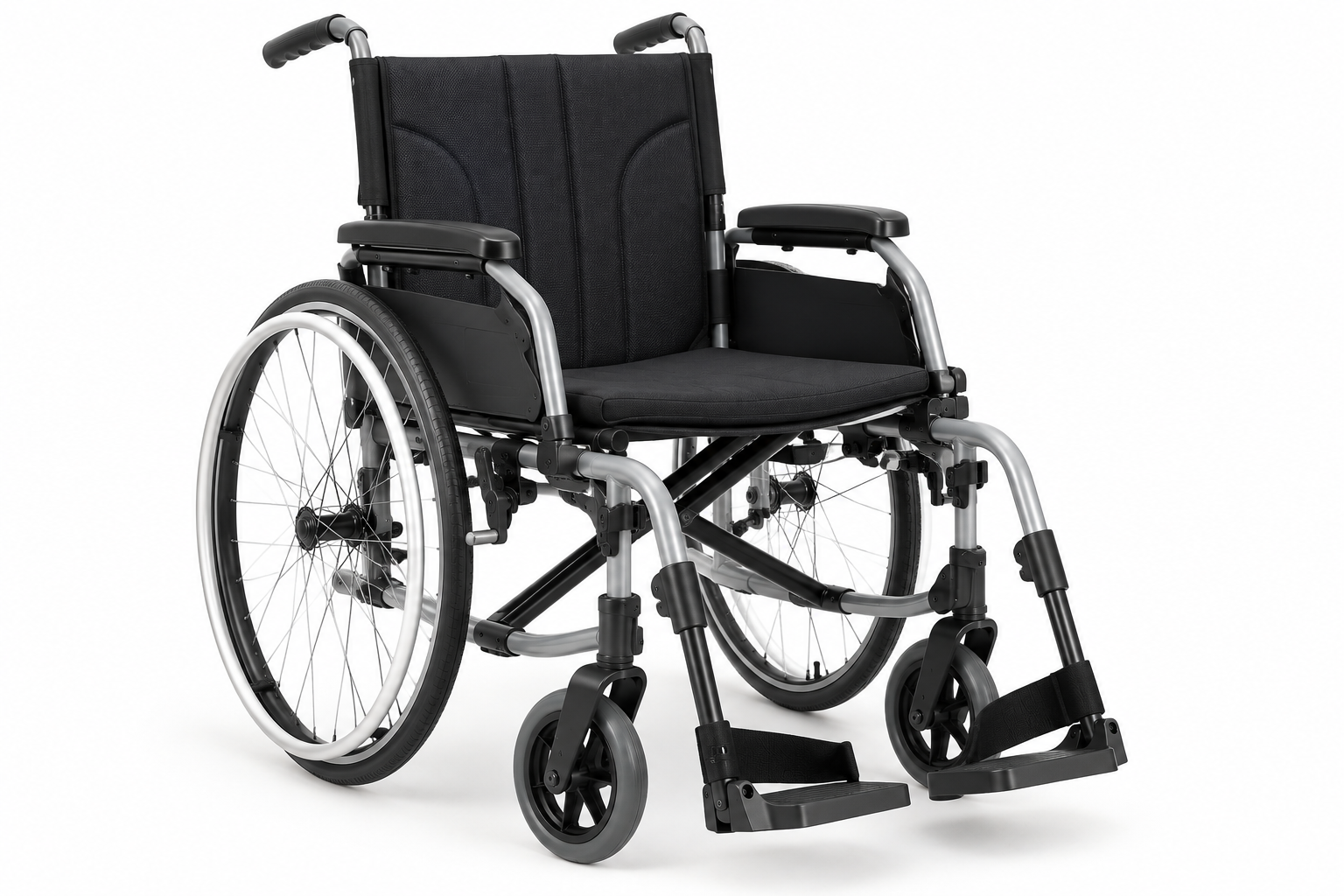
The BREEZY 90 uses a folding format that may suit users who transport their wheelchair often. Correct sizing still remains important for efficient propulsion.
ZIPPIE Zone for Active Manual Mobility
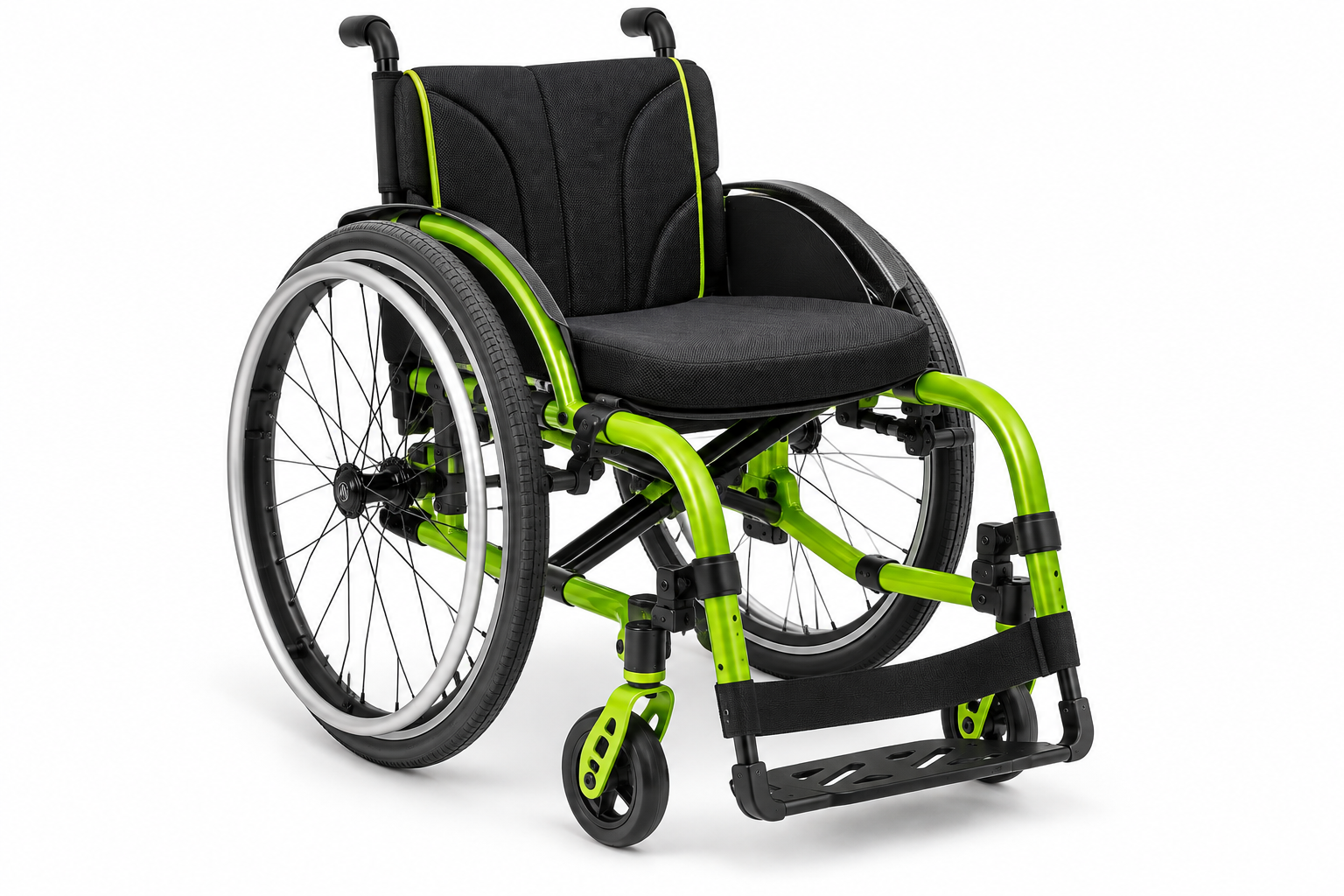
The ZIPPIE Zone supports active manual mobility for younger users. Seating and frame settings may need review as the user grows.
Build a More Comfortable Routine for Long-Term Wheelchair Use
Look at your entire day rather than one push at a time. Distance, surface type, transfers, tyre pressure and chair condition all influence how much work your shoulders perform.
These long-term wheelchair use tips can make daily travel easier:
- Break demanding routes into smaller sections when possible. Choose lifts, accessible entrances and smoother pathways where available.
- Check tyre pressure, wheel movement and seating position. Extra rolling resistance means your arms must work harder.
The manual wheelchair propulsion technique you use can also change with the surface. Longer strokes may suit smooth flooring, while steep or uneven sections may need shorter controlled movements.
Scoot’s guide to mobility aids for daily independence also explains how different mobility products can support everyday movement.
These long-term wheelchair use tips should continue as your needs change. Strength, flexibility, body weight, seating tolerance and daily travel patterns can all shift over time.
Conclusion
A suitable manual wheelchair propulsion technique can reduce repeated shoulder strain and make everyday wheelchair use easier on your upper body. Your stroke length, rim contact, seating position and rear-wheel setup all affect how much effort each trip demands.
At Scoot, we can help you choose a wheelchair setup around your mobility needs, daily routine and physical requirements. We can also support you with wheelchair trials, seating systems, positioning products and manual wheelchair options.
If shoulder fatigue or poor wheelchair fit is affecting your movement, speak with our mobility team. We will help you explore practical choices for safer, more comfortable and more efficient long-term mobility.
Frequently Asked Questions
Why do long-term wheelchair users develop shoulder pain?
Repeated pushing, transfers and poor wheelchair fit can overload shoulder tissues over time and increase the chance of a wheelchair user shoulder injury.
What is the correct technique for pushing a manual wheelchair?
Use longer controlled strokes, comfortable rim contact, stable seating and relaxed recovery movements without forcing your shoulders too far behind your body.
Can poor propulsion technique cause injury over time?
Yes. Repeated high-force strokes and poor positioning can gradually overload the muscles, tendons and joints around your shoulders during everyday wheelchair use.
How can wheelchair users protect their shoulders daily?
Use efficient strokes, maintain suitable seating, choose easier routes, take recovery breaks and ask a professional for support when discomfort starts.
When should a wheelchair user consult a specialist about pain?
Seek professional assessment when pain persists, affects transfers, reduces pushing distance, causes weakness or changes the way you normally use your arms.