
Blogs & Events
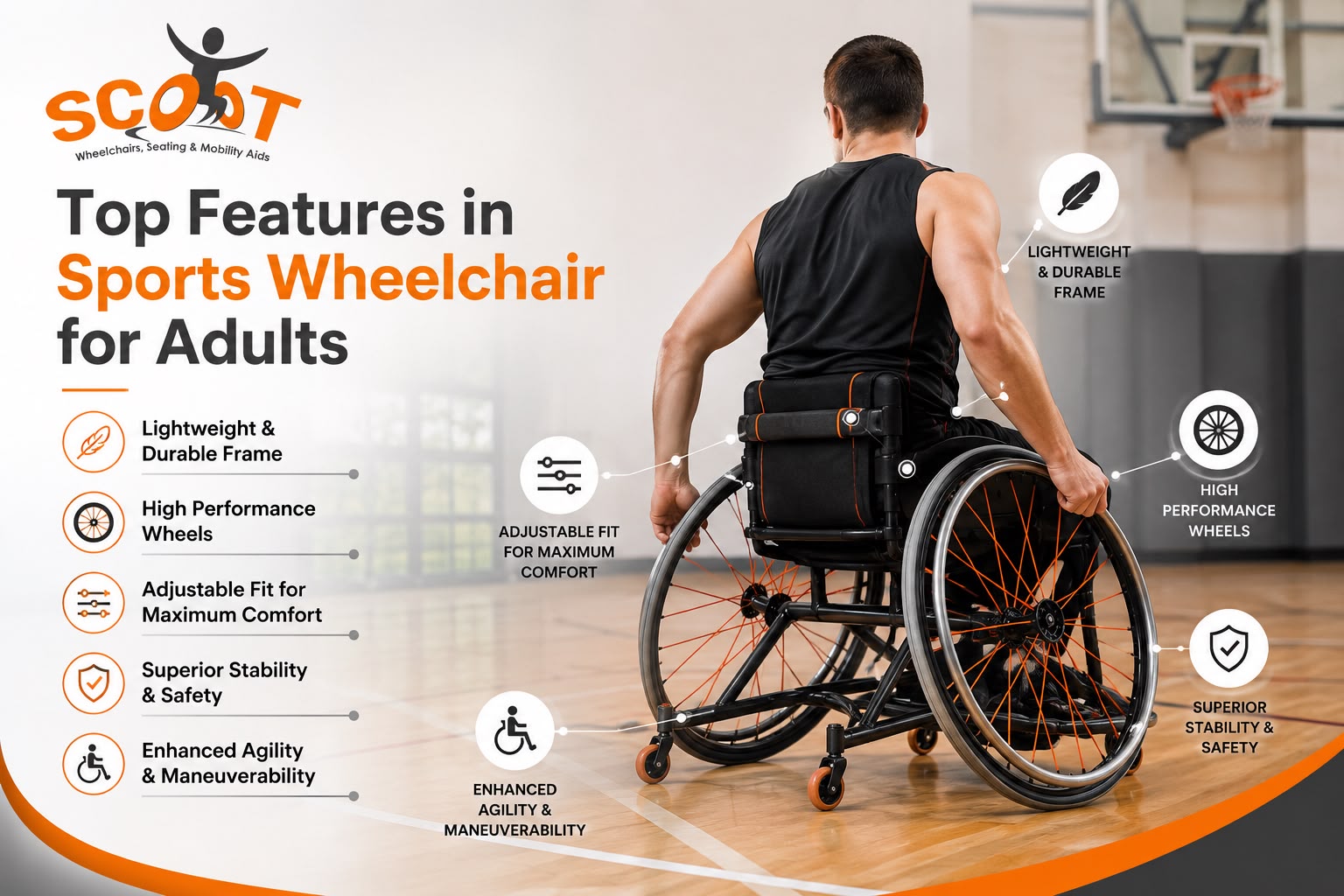
Top Features in Sports Wheelchairs for Adults
Are you choosing a chair for speed, daily movement, or both? A sports wheelchair for adults should do more than look fast. It should match your body, your sport, and your daily route. A weak setup wastes effort. A smart one protects your shoulders and supports posture. It should also make transfers easier and reduce strain over time.
The right frame and wheel setup can change how smoothly you move each day. That becomes even more important when you use the chair for sports and regular mobility. Before you buy, you need to know which features actually improve control, comfort, and long-term use.
Key Features That Improve Daily Use and Performance
The right features decide how the chair performs in motion and how it feels after long use. A well-designed setup supports speed, posture, control, and easier handling across daily routines. When these features work together, the chair feels more efficient, stable, and suited to your body.
Lightweight Frame for Easy Movement
A lighter frame cuts effort from every push. In a good setup, a sports wheelchair for adults uses a rigid frame, fewer moving joints, and cleaner energy transfer. Sports wheelchair research shows that lighter, stiffer materials and rigid geometry improved speed and response, and many of those ideas later moved into daily-use chairs.
If you compare a hospital chair with a lightweight sports wheelchair, the difference shows up fast. You push less, turn faster, and load the chair into a car with less strain. Many users who want an active wheelchair for adults also prefer a rigid base because it feels direct in motion.
Custom Seating and Posture Support
Seat width, seat depth, back angle, cushion type, and footrest height shape how your pelvis stays placed during movement. Rehab seating sources note that the seat, backrest, cushion, footrests, and arm support all affect upright sitting and fit, while cushion research links seat design with interface pressure and comfort.
This is where many buyers miss the mark. They chase the best sports wheelchair but ignore their own posture pattern. An adaptive sports wheelchair should fit your body first, then your activity. If you need more trunk support, lateral control, or pressure care, the seating package should solve that before colour or brand.
For better posture and pressure care, read SCOOT’s guide on how to choose the best wheelchair seat cushion.
High-Performance Wheel Design and Grip
The wheel setup changes how the chair behaves at speed. Camber widens the base, protects the hands, and sharpens turning. Research on sports wheelchair biomechanics shows that camber entered wheelchair basketball and racing to improve turning response and stability.
A good wheelchair for sports activities also needs the right handrim grip, rear wheel size, tyre profile, and front caster setup. If the chair slips under load or drags in every turn, you lose speed. That is why the best sports wheelchair always feels balanced, not just light.
Adjustable Balance and Stability Setup
Speed comes from setup, not from marketing lines. Rear axle position, seat dump, back angle, anti-tip choice, and centre of gravity all change how the chair launches, turns, and climbs small obstacles. A badly tuned sports wheelchair for adults can feel twitchy at one moment and heavy at the next.
This point affects daily life too. A chair can feel good on court and still fail at transfers, ramps, tight doors, or uneven roads. Studies on wheelchair stability show that seat changes and rear axle position shift the centre of gravity and change manoeuvrability. That is why a wheelchair for sports activities needs proper tuning, not guesswork.
Durable Materials for Long-Term Use
Adult users need strong welds, reliable bearings, solid side guards, and materials that handle repeated loads. Aluminium stays popular because it keeps weight lower than steel at a lower price than titanium, while titanium still appeals to users who want lower vibration and a premium ride feel. Sports wheelchair design helped bring these lighter frame materials into wider wheelchair use.
A durable chair also keeps service costs under control. That point becomes more important when you want an athletic wheelchair in India that buyers can use across training and travel.
Compact Design for Transport and Storage
A sports wheelchair for adults should therefore come apart fast, fit into smaller spaces, and keep its setup after repeated loading and unloading.
A lightweight sports wheelchair often wins on liftability and clean handling, while a folding chair may help users who prioritise assisted transport or easier standing transfers. Manual wheelchair guidance also notes that rigid chairs fit small areas well and push more efficiently because the frame flexes less.
Why Build Quality and Design Impact Everyday Use
A sports chair does not serve only athletes. It also serves adults who want sharper movement, shorter push strokes, and less wasted effort across daily routes. That need keeps growing in India. A recent Svayam report, cited by The New Indian Express, said over 34% of India’s population lives with restricted mobility. People need better fit and better engineering, not generic chairs that force the body into bad mechanics.
At SCOOT, we see this need through a wider mobility lens. The chair should support active living, but it should also support posture, skin safety, transport, and long-term shoulder health. That is why many adults now look for an active wheelchair for adults instead of an institutional chair with basic movement only.
Choosing the Right Fit in a Sports Wheelchair for Adults
Fit starts with assessment. You should check hip width, thigh length, seat-to-floor height, back support need, push style, transfer method, and sport demand. Mobility India, citing WHO guidance, says around 6 million people in India may require wheelchairs, yet only a small share have access to appropriate ones. That gap makes proper prescription and fitting even more important.
Before you choose an adaptive sports wheelchair or an athletic wheelchair, India supplier markets as high-performance, match the frame to the job you need done.
User Need | Setup Priority | Why It Helps |
| Fast court turns | More camber and a rigid frame | Improves side stability and turning response |
| Long daily propulsion | Efficient axle position and lighter frame | Cuts push effort over distance |
| Better trunk support | Custom backrest and cushion | Keeps posture steady during movement |
| Safer transfers | Stable seat height and balanced setup | Makes entry and exit easier |
| Easy car loading | Quick-release wheels and compact frame | Reduces lift effort and storage hassle |
Use the table as a starting point, not a final prescription. The best results come when a clinician or skilled provider checks your seating, mobility goals, and daily routine together.
For injury-linked mobility needs, read SCOOT’s guide on spinal cord injury: causes, symptoms and latest information.
How Scoot Mobility Supports Adult Mobility Solutions
SCOOT is the wheelchair, seating, and mobility aids division of Ktwo Healthcare Pvt. Ltd., and its product range spans sports wheelchairs, seating systems, gait trainers, standing devices, exoskeleton robotics, vehicle modification, and home or office accessibility support. That mix connects sports mobility with rehabilitation, posture care, and access, not with sport alone.
At SCOOT, we do not treat adult mobility as a single-product issue. We connect chair selection with function, seating, and long-term use for adults who want sharper movement after injury, sport, work, or travel.
Our adult mobility support stands out through:
- customised mobility solutions based on user need, not generic supply
- rehabilitation-linked products such as gait trainers, standing devices, and exoskeleton systems
- clinical care, consultation, and after-sales support within the service model
That broader structure helps users choose a chair that works beyond one activity and helps families plan.
Final Thoughts Before Buying a Sports Wheelchair for Adults
Do not buy on looks alone. Check frame rigidity, wheel setup, seating fit, transport needs, repair support, and the type of movement you expect every week. A chair that fits your sport but fails your daily routine will create friction fast. A chair that fits your body and your routine will serve you longer and move better.
If you want expert guidance before choosing a sports wheelchair for adults, speak with SCOOT and compare options that suit your body, sport, and daily mobility goals. We help adults match mobility equipment with clinical fit, active use, and long-term function.
FAQs
What are the characteristics of a mobility chair that I should be looking for that is active?
For everyday use, seek out durability, comfort, wheel camber, axle adjustments, grip properties, pressure care, and transport convenience.
Which design would be fastest, stable, and quickest to turn?
A rigid frame, tuned camber, correct seat angle, and rear axle placement provide stability, quick turns, and speed in tandem.
What advantage will lightweight frames have on performance and comfort?
Light frames will help you not to exert as much force when pushing, make it easier to lift, prevent shoulder strain, and allow you to cover more distance without fatigue each day.
What are the differences between models used daily and athletic models?
The daily use models prefer comfort and transfers. Rigidity, agility, protection, and sport-specific geometry are preferred features in athletic models for quicker movement in play.
Where do I get the optimal seat and wheel configuration for control?
Select seating by hip width, trunk control, pressure risk, sport type, and hand reach to wheels during propulsion for control.