
Blogs & Events
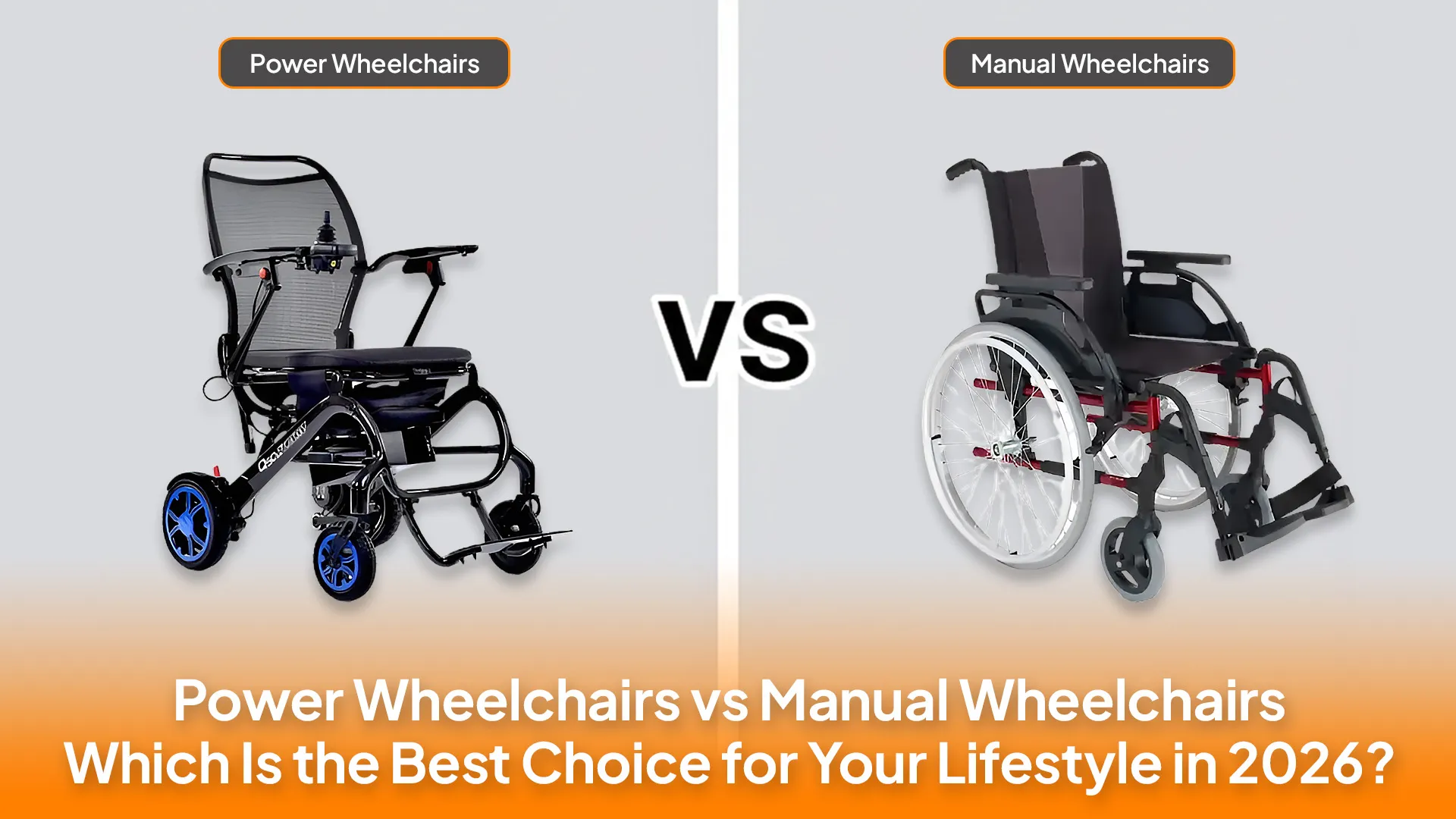
Power Wheelchairs vs Manual Wheelchairs: Which Is the Best Choice for Your Lifestyle in 2026?
Still asking yourself which chair actually fits your daily life in 2026?
You probably see many opinions on power wheelchair vs manual wheelchair and still feel unsure, especially in Indian cities with traffic, uneven pavements and compact flats.
The right choice does more than move you from point A to B. It supports your independence, comfort and health for years. It also becomes the best wheelchair for mobility in your context, not just on paper.
In this guide we look at design, lifestyle fit and clinical points. As SCOOT, the wheelchair and mobility division, we also share how specialised products and assessments change the decision for users across India.
Manual Wheelchairs: Features, Benefits and User Lifestyle Fit
What a Manual Wheelchair Offers in 2026?
A manual chair uses your upper body or a caregiver’s push for movement.
At SCOOT, manual options cover standard, ultralight and sports models. Standard chairs such as BREEZY 90 suit temporary or short-distance use. Ultralight chairs such as QUICKIE Nitrum or RGK Tiga Sub4 suit active, are suited for long-term users who move a lot every day.
These designs give you lightweight wheelchair options that fold, fit in car boots and handle tight doorways in Indian homes.
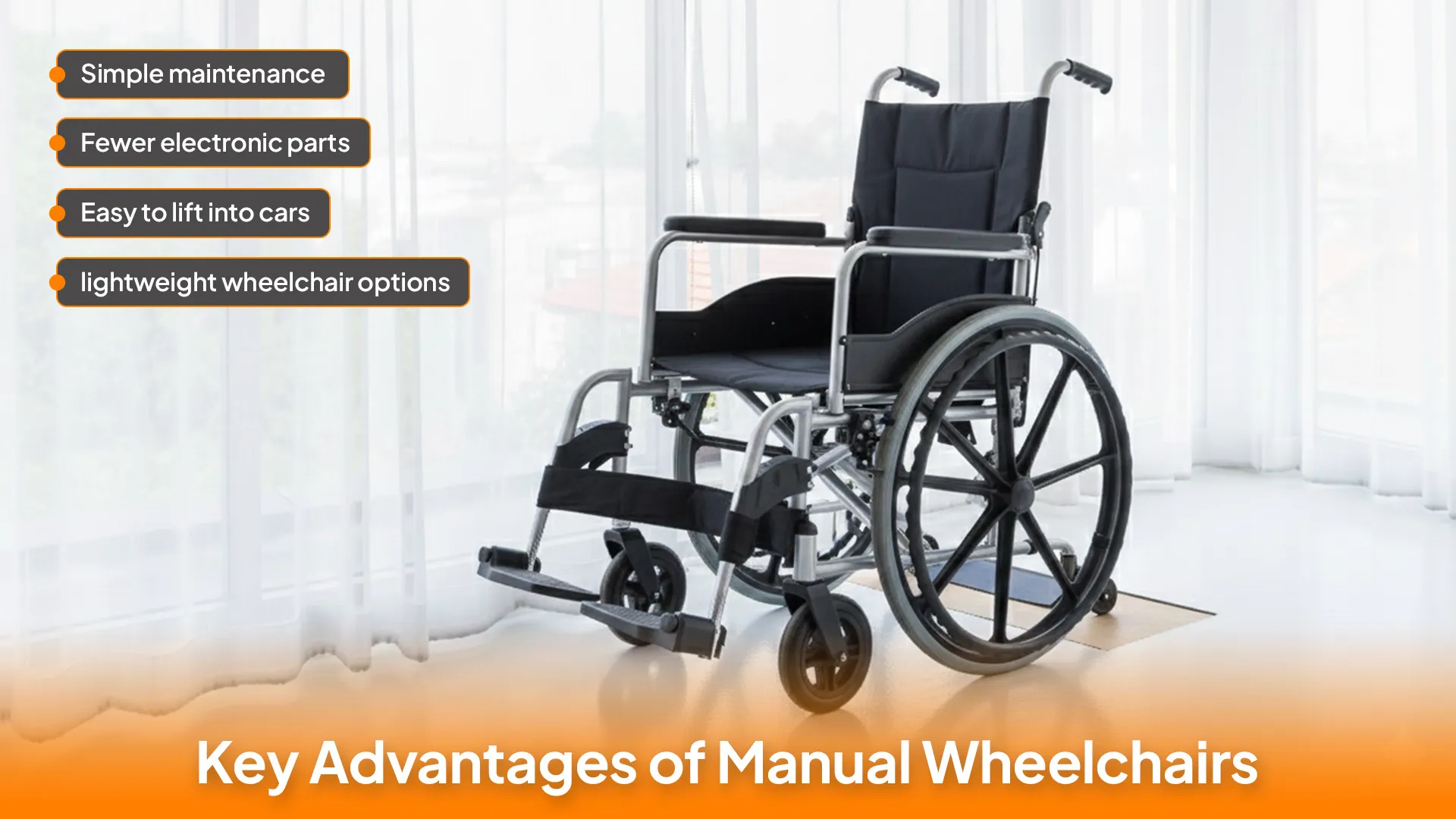
Key Advantages of Manual Wheelchairs
You control speed and direction directly with your arms. That control brings clear manual wheelchair advantages for many users.
Key points:
- Lower upfront price compared with power chairs.
- Simple maintenance, fewer electronic parts.
- Easy to lift into cars or taxis when you pick lightweight wheelchair options.
- Strong choice when you want fitness and engagement through self-propulsion.
For some users, a manual chair becomes the best wheelchair for mobility because it keeps movement simple and portable.
Limitations to Keep in Mind
Manual chairs demand strength and stamina. Long distances in hot Indian weather can cause shoulder pain and fatigue. Slopes, ramps and broken pavements increase that strain.
If you live alone, or if your caregiver cannot push regularly, this effort might reduce your real-world independence. In those cases the manual wheelchair advantages start to fade.
Who Does a Manual Wheelchair Suit Best?
A manual chair fits when you:
- Have good upper-body strength.
- Travel moderate distances each day.
- Need a compact chair for lifts, autos and small cars.
- Prefer independent living
Power Wheelchairs: Technology, Comfort and Daily Independence
What Does a Power Wheelchair Offer in 2026?
A power chair uses batteries and a joystick or alternative controls for movement.
SCOOT offers power models such as QUICKIE Q50R, Q300 M Mini and Q700 M HD. These handle narrow corridors, building ramps and outdoor paths while you sit in a stable, supportive position.
Smart programming, advanced seating and mid-wheel drive layouts create strong power wheelchair benefits for users who spend most of the day seated.
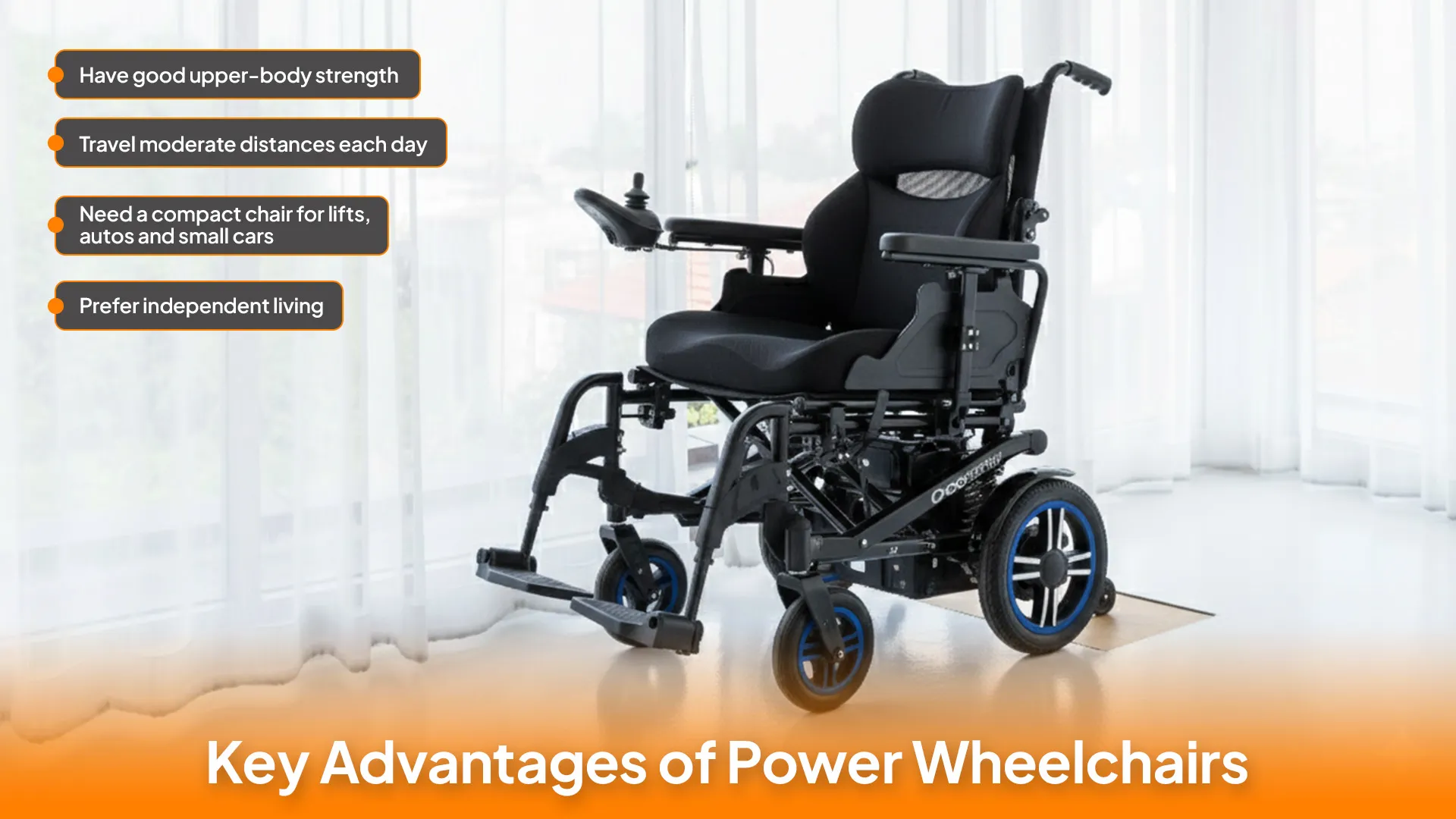
Key Advantages of Power Wheelchairs
Key power wheelchair benefits include:
- Long distances with almost no physical strain.
- Custom seating for posture, pressure relief and trunk support.
- Strong performance on ramps, grass and rougher Indian surfaces.
- Easier mobility for users with progressive conditions or limited arm function.
For many families the power chair becomes the wheelchair for elderly and disabled members who cannot push a manual chair safely.
Limitations to Consider
Power chairs weigh more and need charging space. You need lifts or ramps that handle higher weight. Transport requires a larger vehicle or accessible taxi.
Prices also rise because of electronics and batteries. However, for users who rely on a wheelchair for elderly and disabled care every day, that cost often aligns with the increased independence.
Who Does a Power Wheelchair Suit Best?
A power chair fits when you:
- Have limited upper-body strength or coordination.
- Need advanced seating for posture or skin protection.
- Move across larger campuses, business parks or outdoor areas.

Power Wheelchair vs Manual Wheelchair: Lifestyle-Based Comparison for 2026
Here you look at power wheelchair vs manual wheelchair in daily life, not just on spec sheets.
Daily Routine and Independence Levels
In a study of children with cerebral palsy aged 3 to 18, manual wheelchair users needed adult assistance in 86 percent of cases while powered wheelchair users reached independent mobility in 86 percent of cases. That pattern appears often in adults too when distance and time increase.
If you depend on others to push, a power chair can restore control over when you leave home, go to work or meet friends.
Physical Strength, Health and Comfort
Manual use suits strong shoulders and stable trunk control. If you already feel pain, a manual chair can worsen joints. Then power wheelchair vs manual wheelchair tilts strongly toward powered options.
Power chairs help you hold better posture, use tilt or recline and manage fatigue. These features support long-term health in many Indian users with neurological or spinal conditions.
Home, Outdoor Spaces and Transport Needs
Many Indian flats have narrow doors and small lifts. Compact power chairs such as folding or mid-wheel designs handle these spaces better now, but some buildings still suit a slim manual frame.
Factor | Manual wheelchair | Power wheelchair |
| Primary effort | Your arms or caregiver push | Joystick or alternative controls |
| Best trip length | Short to medium | Medium to long |
| Portability | High, especially ultralight variants | Lower, needs planning |
| Indoor manoeuvrability | Strong in very tight spaces | Strong in models with compact power bases |
| Ongoing running costs | Low | Higher due to motors, seating parts, batteries and servicing |
Budget and Long-Term Costs
Manual chairs start at lower prices. But you must count possible medical costs from overuse injuries. For many heavy users power wheelchair benefits offset higher initial investment.
When you evaluate power wheelchair vs manual wheelchair, think in five or ten year timelines, not just the purchase moment.
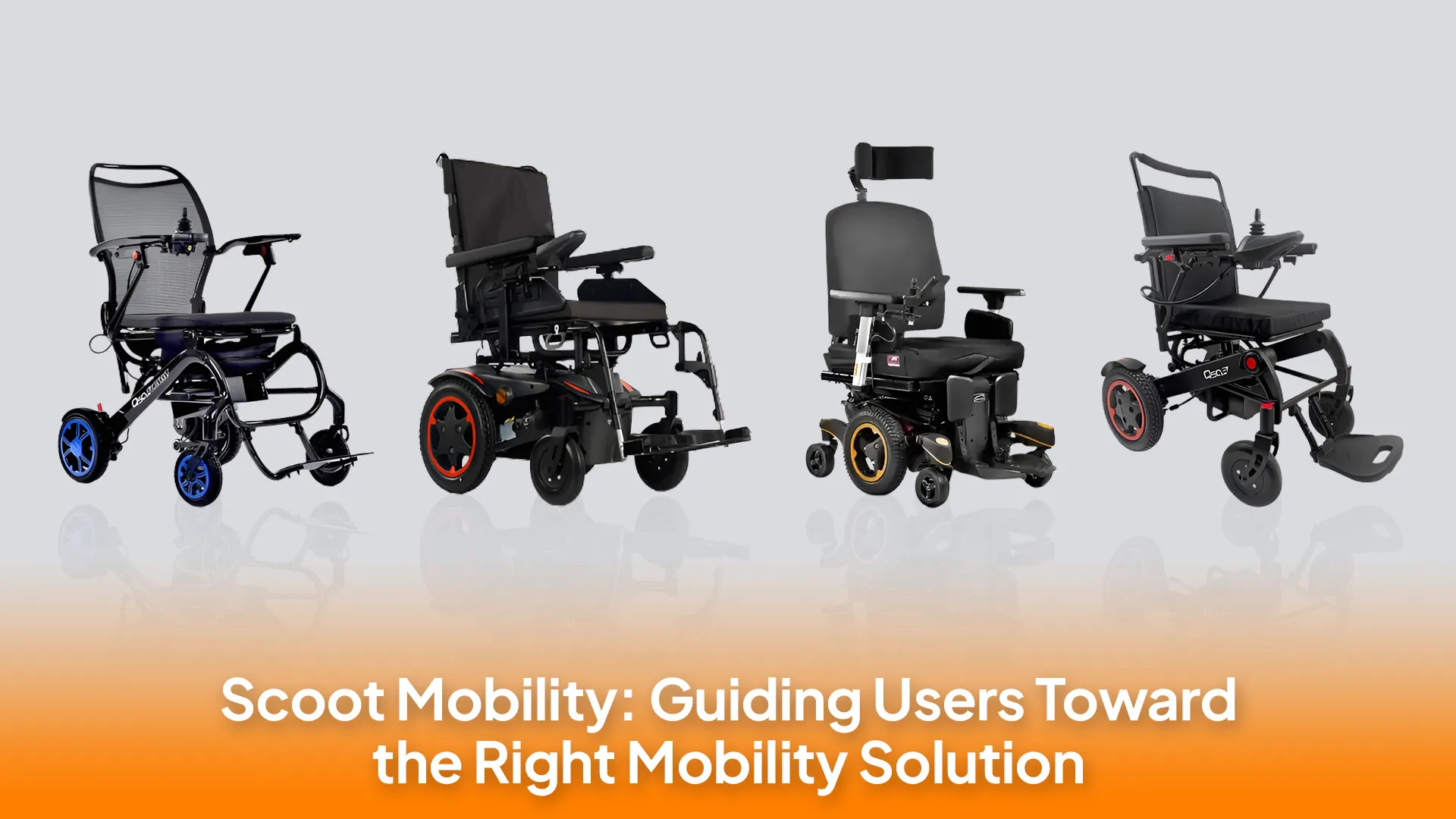
Scoot Mobility: Guiding Users Toward the Right Mobility Solution
SCOOT is the wheelchair and mobility division of Ktwo Healthcare. We focus on clinical seating, custom-built frames and advanced mobility technology for India.
Scoot Mobility’s Clinical Approach to Wheelchair Selection
We at SCOOT use structured assessments. Our specialists study your diagnosis, range of motion, skin risk, home layout and work needs. Then we match products from standard, ultralight, power, tilt-in-space, sports and drive-assist ranges.
This process turns a confusing market into clear choices, including the best wheelchair for mobility for your stage of life.
Manual and Power Options at SCOOT
We deliver a focused range of high-quality mobility solutions.
In manual wheelchairs, models like BREEZY 90 and ZIPPIE Zone offer strong performance with durable, well-engineered frames.
Our power lineup includes compact travel options such as the QUICKIE Q50R and more capable outdoor performers like the Q300 M Mini.
Inside SCOOT, we see lightweight wheelchair options and heavy-duty power chairs as one toolbox, not separate worlds. We help you select the right combination for realistic Indian conditions.
Lifestyle Scenarios To Help You Identify Your Ideal Wheelchair
- Young professional in Bengaluru tech park: A compact power chair supports long campus distances and meetings without fatigue.
- Active long-term user in Pune: An ultralight manual chair delivers fast movement and gym access with strong manual wheelchair advantages.
- Retired parent in Chennai: A mid-wheel power chair can become the safest wheelchair for elderly and disabled care at home.
- Teen in Mumbai flats: Folding power chairs fit lifts and weekend outings while parents manage charging routines.
When you examine power wheelchair vs manual wheelchair through real stories, trade-offs feel clearer than generic advice.

Final Verdict: Choosing the Wheelchair That Aligns With Your 2026 Lifestyle
There is no single universal winner in the power wheelchair vs manual wheelchair debate. The real winner fits your body, daily routine, budget and long-term health.
Use this article as a starting point, not your final decision. Sit in chairs, test manoeuvrability, discuss posture and transfers with clinicians. Listen to your shoulders and your energy levels at the end of a normal day.
If you live in India and want structured help, speak to our team. We at SCOOT guide you through assessments, explain power wheelchair benefits, walk you through lightweight wheelchair options and help your family feel confident about long-term mobility.
FAQs
What is the difference between a power wheelchair and a manual wheelchair?
A manual chair uses your strength or a caregiver. A power chair uses batteries, controls and seating systems for movement.
Which wheelchair is better for outdoor and indoor mobility?
Power chairs handle long outdoor distances and slopes. Manual chairs handle very tight indoor spaces and quick transfers across short distances.
Are power wheelchairs suitable for elderly users?
Yes, power chairs often suit older users who lack strength yet still want controlled, safe movement inside and outside home.
How do I choose the right wheelchair for daily use?
List your daily routes, strength, pain levels, home layout and budget, then meet a clinical team for structured assessment and trials.
What is the cost difference between power and manual wheelchairs?
Manual chairs usually start cheaper. Power chairs cost more upfront but can reduce injury, fatigue and assistance costs over several years.