
Blogs & Events
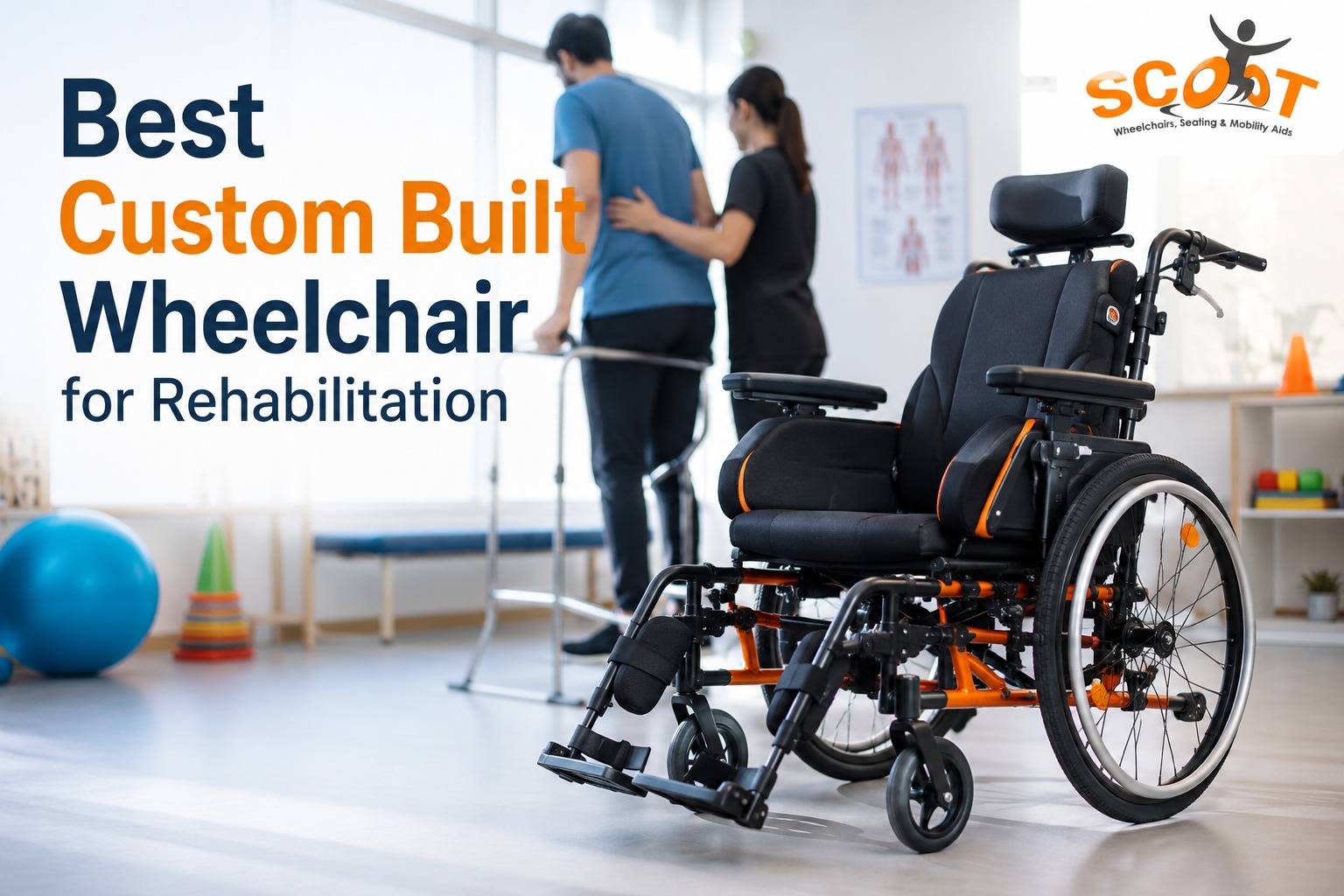
Best Custom Built Wheelchair for Rehabilitation
Are you trying to recover with a chair that feels wrong every single day? A custom-built wheelchair can change how you sit, move, transfer, and manage long rehab hours. A poor fit can slow progress, raise pain, and tire you early. A well-fitted chair supports posture, saves energy, and helps you stay active through therapy, home routines, and community travel.
Rehabilitation does not move in a straight line. Your body, muscle tone, balance, and daily tasks keep changing. That is why many users do better with a custom wheelchair for rehabilitation instead of a standard unit picked only by seat width and weight limit.
What Defines a Custom-Built Wheelchair for Rehabilitation
A rehab chair should match the user, not the shelf. That is the basic difference. A standard model follows fixed sizes. A tailored rehab chair follows body shape, pelvic position, trunk control, upper limb function, transfer style, and the spaces where the user moves each day.
A personalised wheelchair supports recovery through fit, not through appearance. Clinicians and mobility specialists usually check seat width, seat depth, back angle, cushion type, lower limb position, foot support, wheel access, and push efficiency before they suggest a final setup. That process turns a basic frame into a wheelchair with custom seating that supports function and skin safety over long hours.
A good made-to-measure wheelchair also respects the rehab goal. One user may need trunk stability after a spinal injury. Another may need pressure relief after long sitting hours. A child may need growth-friendly support. A stroke user may need better symmetry and hand access for safer movement. That is why a custom wheelchair for rehabilitation often performs better than a one-size unit in long-term care.
For paediatric rehab seating needs, read SCOOT’s guide on best cerebral palsy wheelchair.
How Custom Seating Supports Comfort and Daily Progress
A rehabilitation wheelchair should do more than move you from one place to another. It should support posture, reduce daily strain, and help the body stay stable during long sitting hours. That is where custom seating changes the full experience, because the right fit can improve comfort, pressure control, and movement through the day.
Tailored Seating for Long Duration Use
Long sitting hours expose every fitting error. Seat depth that runs too long presses behind the knees. A seat width that runs too wide weakens pelvic position. A flat cushion may fail to protect high-risk areas. In this stage, a custom-built wheelchair helps because the seat and back system work with the body, not against it.
The right seat base, contour, cushion density, and lateral support can turn a painful day into a manageable one. A proper wheelchair with custom seating also reduces sliding, frequent repositioning, and caregiver strain.
Body Alignment That Reduces Strain
Posture affects more than comfort. It affects breathing, swallowing, reach, head control, and fatigue. A chair that tilts the pelvis badly can pull the spine into poor alignment and load the shoulders harder during propulsion.
A good setup starts with the pelvis, then builds up through trunk support, back height, arm position, and foot placement. That is where a made-to-measure wheelchair becomes useful. It allows precise changes in seat angle, back tension, pelvic support, and lower limb placement so the body stays balanced through work, meals, travel, and therapy sessions.
Pressure Management for Skin Safety
Pressure sores can interrupt rehabilitation for weeks. They can also lead to hospital care, dressing cycles, infection risk, and loss of activity. Cushion choice should never be an afterthought. It should match body weight, pelvic shape, sitting duration, heat build-up, and transfer style.
This is another place where a custom-built wheelchair earns its value. Pressure mapping, shaped cushions, and postural support reduce high-load points across the seat and back. Global disability healthcare reviews estimate that nearly 1.3 billion people live with significant disabilities. That rising need has pushed stronger demand for adaptive mobility devices, posture systems, and long-wear seating solutions.
Smooth Mobility Across Indoor and Outdoor Surfaces
Many rehab users do not stay in one setting. They move across tiled floors, narrow doors, rough pavements, ramps, clinic corridors, lift entrances, and transport vehicles. A chair that rolls well indoors may feel heavy outside. A chair built for speed may feel unstable for transfers.
Frame design, caster size, wheel camber, axle placement, and overall weight all change mobility. A well-set rehabilitation wheelchair should reduce rolling resistance, improve turning control, and support safe movement across home and public spaces.
Adjustable Components for Changing Rehab Needs
Recovery often shifts over months. Muscle tone can change. Swelling can change. Sitting tolerance can improve. Therapy goals can change from basic sitting to independent movement or sports use. Fixed chairs struggle in these situations.
A flexible setup handles those shifts better. That is where a custom-built wheelchair helps again. Adjustable backrest height, seat-to-floor height, leg support angle, arm support, cushion layers, and wheel position let the chair change as the body changes. An adaptive custom wheelchair is useful when the user needs staged support rather than a single fixed format.
Lightweight Frame for Easier Movement and Handling
Weight affects nearly every daily task. A heavy chair needs more force during propulsion. It also makes car loading, storage, and caregiver support harder. Rehab users who self-propel often need a frame that preserves shoulder function over time.
A lighter setup can improve push efficiency and reduce wasted effort. It also helps when the user needs frequent transfers or short trips within the community. In many cases, a personalised wheelchair with a lighter frame and smart axle placement feels easier to handle than a heavier generic chair.
Key Features to Check Before Choosing a Custom-Built Wheelchair
Selection should follow function. Start with the body, then the activity, then the environment. WHO-linked disability healthcare reviews noted that accessible transportation and affordable mobility devices remain among the biggest barriers for wheelchair users in India and other developing nations.
India and other developing regions still face major barriers to accessible transport and affordable mobility devices. That makes the wrong wheelchair costlier over time.
Feature | Why It Affects Rehabilitation | What You Should Check |
| Seat and back fit | Supports posture and sitting tolerance | Width, depth, contour, back angle |
| Cushion system | Protects skin and reduces pressure load | Material, pressure relief, heat handling |
| Wheel setup | Changes push the effort and turn | Rear wheel position, caster size, camber |
| Adjustability | Allows the chair to evolve with recovery | Armrests, legrests, back height, seat angle |
Before you decide, check how the chair performs during transfers, toilet access, therapy sessions, transport, and long periods of sitting. A rehabilitation wheelchair should solve daily barriers, not add new ones. If the user needs deeper postural correction, a made-to-measure wheelchair usually gives better long-term value than frequent replacements.
Who Should Consider Personalised Rehab Seating
This type of mobility support suits users who spend long hours seated, show postural asymmetry, face skin risk, or move through active rehab plans. It can help people with spinal cord injury, cerebral palsy, stroke, muscular weakness, traumatic injury, and age-related mobility loss.
It also suits users whose present chair causes shoulder pain, sliding, poor balance, or fatigue. A strong adaptive custom wheelchair setup can support better transfers, better reach, and better participation in school, work, and therapy.
India’s assistive devices and wheelchair demand is rising because disability support schemes and ageing needs continue to grow. Rehabilitation centres now see a stronger demand for seating systems that match body shape, medical needs, and daily function. That makes a custom wheelchair for rehabilitation and a carefully fitted wheelchair with custom seating far more relevant today.
For higher support seating needs, read SCOOT’s guide on best quadriplegic wheelchairs.
Why Choose Scoot Mobility for Tailored Wheelchair Solutions
SCOOT is the wheelchair and mobility division focused on clinically customised seating and mobility support, not mass-market chair sales. That difference shows in the way the brand approaches fit, posture, pressure care, and long-term function. At SCOOT, we begin with the user’s body, movement pattern, daily environment, and rehab goal before we suggest a final setup. We do not treat mobility as a simple product swap.
The brand also stands out because it connects wheelchair fitting with a wider rehab pathway. We work across clinical seating, active mobility, paediatric customisation, posture support, pressure management, and advanced mobility systems. That wider view helps users who need more than a basic chair frame.
SCOOT also brings strong depth through:
- posture-focused fitting and seating review
- customised support for paediatric, rehab, and active users
- mobility solutions shaped for long-term independence
For users who need a personalised wheelchair, a paediatric setup, or an adaptive custom wheelchair, SCOOT offers a stronger clinical route than generic retail supply.
Conclusion
Recovery gets harder when the chair fights the body. The right setup supports posture, protects skin, improves movement, and saves effort across the day. If you want a custom-built wheelchair that fits your rehab path with greater care, speak with SCOOT and choose mobility planned around how you live, move, and recover. At SCOOT, we build that path with you.
FAQs
How do I choose the right wheelchair for long-term recovery?
Choose after posture review, seating trial, transfer check, pressure risk review, and home-use assessment. Fit decides comfort, safety, and long-term mobility.
What features improve comfort and posture support daily?
Contoured cushions, pelvic support, back angle, proper seat depth, stable footrests, and balanced wheel position improve comfort and posture daily.
How can seating adjustments reduce pressure and pain?
Seating changes spread body load, improve pelvic position, reduce friction, support balance, and protect skin during long sitting hours.
What is the difference between standard and personalised mobility support?
Standard chairs follow fixed sizes. Personalised mobility support follows body shape, posture, goals, transfers, pressure care, and environment.
Can a rehab wheelchair change as recovery goals change?
Yes. Adjustable seating, wheel position, back height, and support parts let the chair match recovery stages without full replacement.