
Blogs & Events
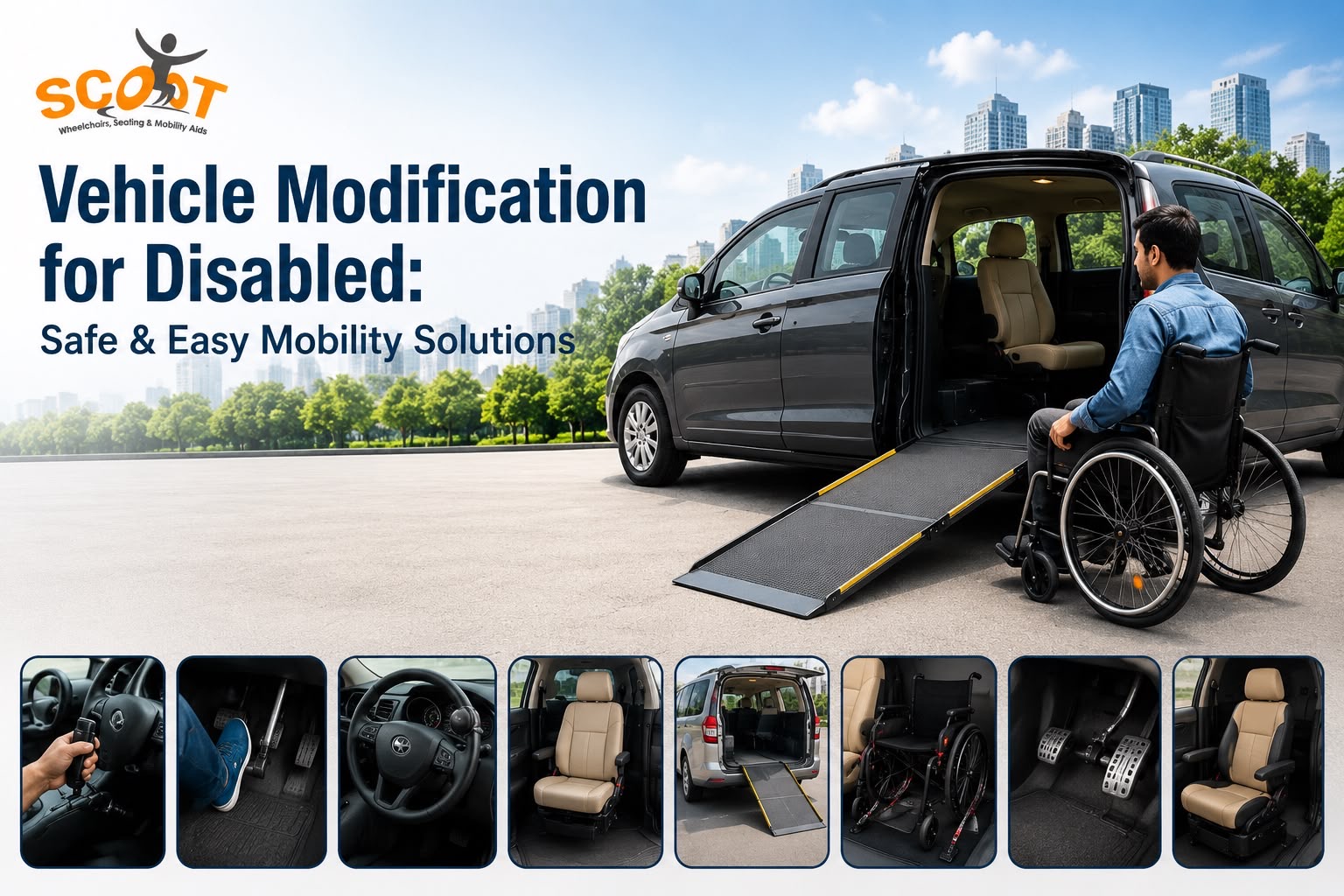
Vehicle Modification for Disabled: Safe & Easy Mobility Solutions
Have you ever asked a simple question that carries a big daily burden: how does a person with disability travel without depending on someone else each time? That question leads straight to vehicle modification for disabled users. A good adaptation does more than change a car. It changes access, work travel, family visits, clinic trips, and personal choice.
In India, the right setup can include hand controls, transfer aids, ramps, swivel seats, and other support systems that match the user’s body, seat posture, and driving task.
For choosing the right mobility support before vehicle changes, read SCOOT’s guide on choosing the right mobility aid.
Why Vehicle Modification Is Essential for Daily Mobility
Vehicle modification supports safer, simpler travel for people with limited movement, transfer difficulty, or reduced driving control. It helps match the vehicle to the user’s physical needs, so daily trips for work, treatment, and family tasks become more manageable. With the right setup, mobility becomes less dependent on assistance and more practical every day.
Improved Driving Control with Custom Adaptations
Driving becomes safer when the controls match the driver, not the other way round. For many users, vehicle modification for disabled drivers starts with hand-operated brake and accelerator systems, steering knobs, left-foot accelerators, pedal extensions, or seat base changes. These changes reduce strain, improve reach, and cut awkward body movement during turns, parking, and stop-go traffic.
They also support accessible driving solutions that suit one person’s physical range instead of a generic factory layout. ARAI’s adapted-vehicle framework also treats the type of disability and the function needed at the wheel as the starting point for any approved adaptation.
Seamless Entry and Exit with Accessibility Features
Entry and exit decide whether a trip feels simple or exhausting. Swivel seats, transfer boards, ramps, lifts, grab points, and door-width changes reduce unsafe lifting and rushed movement. These systems turn standard cars into wheelchair accessible vehicles or make passenger transfer smoother in family cars and vans.
In many cases, car modifications for mobility begin with access first, because a driver or passenger cannot use the vehicle well if transfer itself stays difficult. A good installer studies hip movement, arm reach, chair size, and caregiver support before selecting hardware.
Better Road Safety Through Assistive Mechanisms
Safety depends on fit, not just equipment count. Wrong pedal distance, poor seat height, loose docking, or weak restraint systems can create risk within seconds. Approved assistive mechanisms aim to keep braking effort, steering control, body position, and secure transfer stable through daily use. This is where adaptive vehicle solutions and mobility transport modification work best when the seating system, restraint plan, and driving controls are planned together.
SCOOT’s product range shows that it works across seating, positioning, transport, and access, which helps connect the user’s physical needs with the vehicle setup.
Independence in Daily Transportation Needs
Independent travel affects job attendance, education, therapy visits, and social life. That is why vehicle modification for disabled users should not get treated as a luxury add-on. It is a mobility tool. It also supports accessible driving solutions and passenger travel for users who do not drive but still need safe entry, secure seating, and better transfer support.
When the vehicle works for the user, the day moves with less delay and less dependence on others. That shift often changes the whole pattern of daily life.
Types of Vehicle Modifications That Support Safe Mobility
Different needs call for different systems. Some users need driving control changes. Others need transfer access or seated travel support. In practice, the best adaptive vehicle solutions combine access, posture, control, and restraint. At SCOOT, we look at the user, the seating, and the vehicle as one connected setup, not as separate problems.
That approach fits its wider mobility range, which includes accessibility solutions, seating systems, exoskeleton technology, and transport products such as tricycles.
Modification type | Best use |
| Hand controls | Drivers with limited lower-limb function |
| Left-foot accelerator | Drivers who cannot use the right foot |
| Steering knob and secondary switches | One-hand steering and easier control access |
| Swivel seat or transfer seat | Easier car entry and exit |
| Ramp or lift | Chair loading and passenger access |
| Wheelchair docking and restraints | Secure travel in seated position |
| Pedal extenders and seat height changes | Better reach and driving posture |
These changes support wheelchair accessible vehicles, stronger transfer safety, and practical car modifications for mobility in both self-drive and assisted-travel cases. They also form the base of a good mobility transport modification plan when a user shifts between home, work, and clinical travel during the week.
For higher support mobility needs, read SCOOT’s guide on paraplegic and quadriplegic wheelchair support.
Legal Guidelines for Vehicle Modification for Disabled in India
India’s regulatory path has become clearer. The system recognises “adapted vehicles,” and ARAI standards now cover adapted vehicles across major categories, including passenger vehicles and certain two-wheelers, three-wheelers, and tricycles. The approval path usually involves matching the adaptation to the user’s disability profile, using approved kits or approved fabrication, and completing the registration steps required by the transport authority.
The Government has also stated that vehicles purchased with MHI certificates and concessional GST for eligible persons with orthopaedic disability will be registered as adapted vehicles. MoRTH also proposed steps to ease temporary registration for vehicles that need conversion into adapted vehicles.
Cost Factors and Government Support Options
Costs vary with disability type, vehicle size, imported components, fabrication quality, electronics, and certification needs. A basic hand-control package costs far less than a lift-based passenger setup or full transfer-seat system. Buyers should also factor installation, testing, service, and part replacement. Support routes differ by state and scheme, but public aid remains relevant.
One recent example came from Uttar Pradesh, where officials said more than ₹39.4 crore had been allocated for aids to persons with disabilities, with motorised tricycles and assistive mobility devices being expanded under the central ADIP-type support route based on demand and eligibility. That trend shows continuing policy interest in transport-linked mobility support.
Maintenance and Safety Checks for Modified Vehicles
A safe setup needs routine review. Vehicle modification for disabled users should be inspected for cable wear, mount strength, docking lock function, ramp or lift movement, restraint condition, and switch response. Users should also test transfer flow in a parked vehicle after any repair. Service records help during resale, re-certification, and insurance queries.
A poor maintenance cycle can turn a good setup into a weak one within months. That is why good mobility transport modification work must include service planning from day one, not after a fault appears.
Why Choose Scoot Mobility for Vehicle Modification for Disabled
We do not stop at wheelchairs alone. We connect seating, access, and transport into one mobility path. That gives families one point of support instead of scattered vendors.
- Clinical plus engineering view for custom fit
- Broader mobility stack across wheelchairs, seating, robotics, access, and transport
- Focus on independence, function, and practical daily travel needs
We can align posture, chair support, access design, and transport needs within one brand path. For users who need wheelchair accessible vehicles, adaptive vehicle solutions, or car modifications for mobility, that joined-up approach can save time and reduce mismatch across products.
Conclusion
A modified vehicle should let a person travel with dignity, safety, and choice. The best result comes when the seating, transfer method, control layout, and approval path work together from the start. Families should assess the user first, then the vehicle, then the hardware. That order avoids waste and poor fit.
If you want a guided path for vehicle modification for disabled users, seat support, transport access, and mobility planning, speak with SCOOT and move toward a safer daily travel setup with SCOOT.
FAQs
What is vehicle modification for people with disabilities?
Vehicle modification changes driving, seating, or access systems so a person with disability can travel or drive with better safety.
What types of modifications are available for cars?
Cars can use hand controls, left-foot accelerators, swivel seats, ramps, lifts, steering aids, pedal extenders, and wheelchair docking systems today.
Can wheelchair users drive modified vehicles?
Yes, many wheelchair users drive after medical assessment, correct adaptation, licence approval, and training that matches their physical function needs.
How much does vehicle modification cost?
Costs change with vehicle type, disability needs, imported parts, fabrication work, and certification, so budgets can range widely across India.
Is special training required to use modified vehicles?
Many users need short training to learn hand controls, transfers, parking, and emergency response before they drive alone on roads.