
Blogs & Events
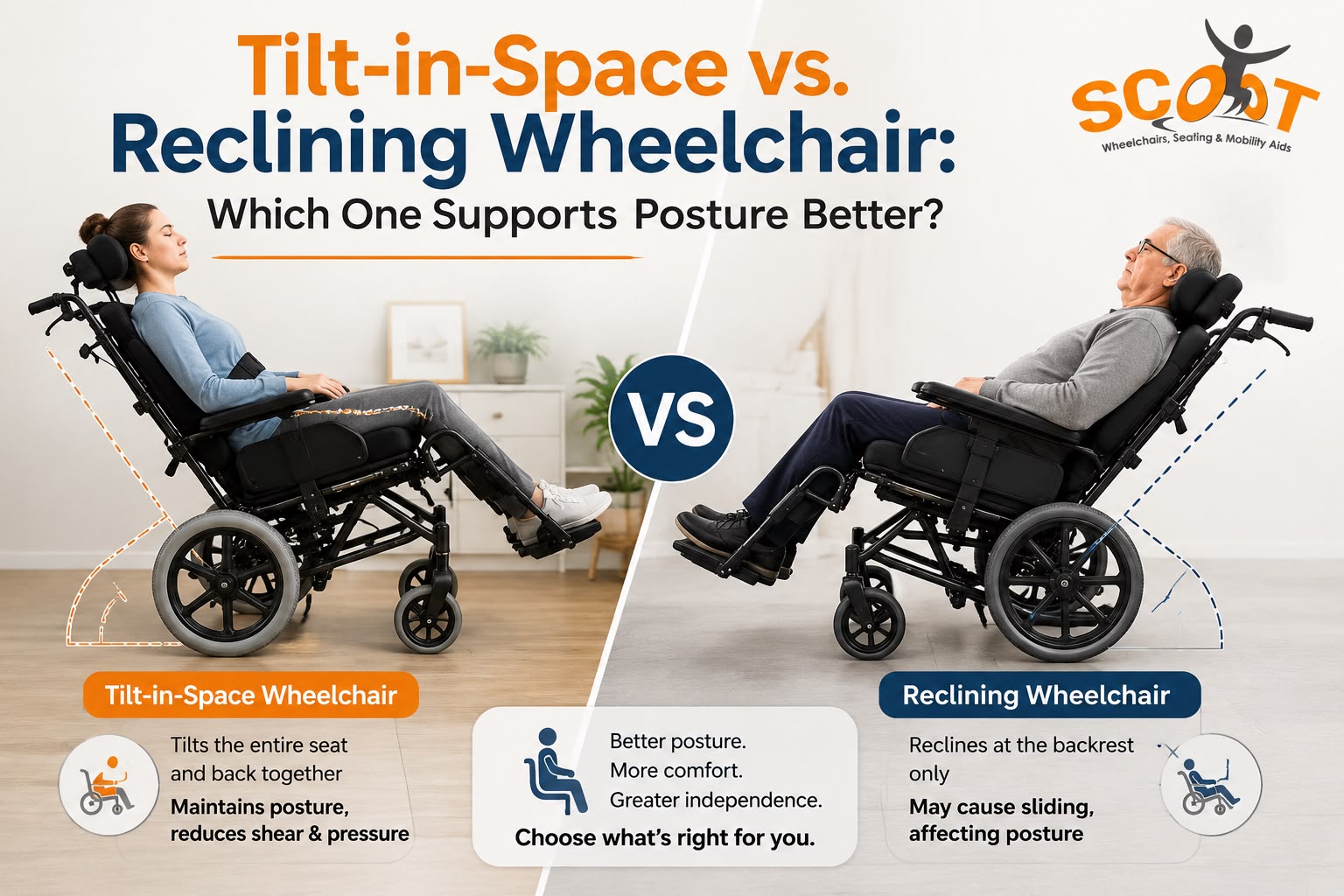
Tilt-in-Space vs Reclining Wheelchair: Which One Supports Posture Better?
Does your body start moving forwards after sitting for an hour? Your hips may slide first. Then the shoulders round, the chin drops, and one foot loses contact with the footplate. Many families notice these changes during lunch, school, office work, or a long car journey.
When you compare tilt-in-space vs reclining wheelchair options, look beyond the moving backrest. Watch the pelvis. Check the hip angle. Notice what happens to the head, feet, arms, and breathing.
A chair may look comfortable in a showroom. Daily use can tell another story. Narrow lifts, uneven roads, long waiting periods, feeding routines, and caregiver handling all affect the final choice.
What Really Changes When the Wheelchair Moves?
Tilt and recline can both move a person backwards. Yet the body does not react in the same way.
A tilt-in-space wheelchair moves the complete seating system as one unit. The seat, backrest, leg supports, and user move together. The hip angle remains nearly the same.
A reclining wheelchair works differently. Its backrest moves backwards while the seat stays in place. This movement opens the angle between the trunk and thighs.
That difference may sound small. In seating work, it changes quite a lot.
Pelvic And Trunk Support During Tilt
The pelvis forms the base for the upper body. When it slides forwards, the spine often rounds. The head may then move forwards to keep the eyes level.
Tilt can reduce this problem because the pelvis remains in contact with the back support. Gravity moves more body weight towards the backrest instead of pulling the user towards the front edge.
For example, a child with weak trunk muscles may lose posture during classroom work. A small change in tilt can help the child return to the back support without opening the hip angle.
While comparing tilt-in-space vs reclining wheelchair functions, check whether the user keeps the same pelvic position during movement. A belt alone cannot correct a poor seat shape.
A suitable posture support wheelchair may also need lateral trunk pads, a shaped backrest, or an anterior chest support. These parts should guide the body. They should not hold the user in a forced position.
Head And Neck Position During Movement
Head support needs more thought than choosing a padded headrest. The headrest must meet the user at the correct height and angle.
A headrest placed too low may push the neck forwards. One placed too far back may offer no support when the chair tilts. Users with limited head control may need an occipital pad, suboccipital support, lateral head pads, or a dynamic system.
Age alone does not decide the setup. Two children of the same age may need very different support. One may have strong head control but poor pelvic stability. Another may need support at the pelvis, chest, and head.
The chair angle should also protect vision. A child should still see the teacher, screen, or communication board after the chair moves.
Pressure Changes Across The Seat And Back
People often use the phrase pressure relief for any change in position. Yet the body needs enough angle and enough time for pressure to move.
Tilt transfers part of the load from the seat towards the backrest. Recline opens the hip angle, though it may not reduce pressure under the pelvis in the same way.
A pressure relief wheelchair must work with a suitable cushion. Foam, air-cell, gel, fluid, and hybrid cushions respond differently. The right choice depends on pelvic shape, skin history, body weight, heat, moisture, transfers, and maintenance.
Around 8 million Indian children with functional disabilities may need wheelchair designs providing postural support.
That number covers very different users. Some children may need basic seat depth correction. Others may require a full seating system with pelvic, trunk, head, and limb support.
Pressure care should never depend on one feature. Cushion condition, clothing folds, continence care, sitting time, nutrition, and skin checks still need attention.
For better pressure care during long sitting hours, read SCOOT’s guide on how to choose the best wheelchair seat cushion.
Tilt in Space vs Reclining Wheelchair: A Closer Comparison
The table below shows the main differences seen during seating trials.
Seating Area | Tilt-in-Space | Reclining Function |
| Hip angle | Remains nearly unchanged | Opens as the backrest moves |
| Pelvic contact | Usually easier to maintain | Sliding may occur |
| Weight movement | Shifts load towards the backrest | Changes trunk and hip position |
| Shear risk | Often lower with correct fitting | May increase during repeated movement |
| Rest position | Supports angled rest | Allows a flatter posture |
| Care tasks | Useful for repositioning | Useful for selected personal care |
| Head position | Moves with the seating unit | May need extra adjustment |
Some wheelchairs provide both functions. In those cases, clinicians may tilt the chair first and then add recline. This sequence can reduce forward movement of the pelvis.
Still, no sequence suits every user. Muscle tone, joint limits, pain, breathing, and feeding needs can change the response.
What To Check Before Choosing A Chair
Start with the user’s current position. Check pelvic level, hip movement, spinal shape, shoulder height, head control, knee range, and foot contact.
Next, look at daily routines. A chair used mainly indoors may need a small turning circle. A school chair may need desk access and easy attendant controls. A travel chair may need folding parts and manageable weight.
During a tilt-in-space vs reclining wheelchair trial, include these everyday situations:
- Eating, writing, phone use, communication, transfers, and resting
- Lift entry, vehicle loading, ramps, rough paths, and caregiver handling
Keep the trial long enough to reveal fatigue. Ten minutes rarely shows the full picture. A user may hold posture during the first few minutes and then start sliding.
Cushion, Backrest, Footplate, And Belt Setup
Good wheelchair positioning starts at the pelvis. The seat width should support the body without squeezing it. The seat depth should support the thighs without pressing behind the knees.
Footplates also affect posture. If they sit too low, the legs pull the pelvis forwards. If they sit too high, pressure may increase under the sitting bones.
A pelvic belt should cross the pelvis at a suitable angle. A loose belt around the abdomen will not stop forward sliding. It may even create discomfort.
Backrests need equal care. A flat sling back can allow the trunk to collapse. A shaped back may offer better contact, though it must suit the user’s spinal form.
A well-fitted posture support wheelchair often uses several small corrections rather than one large support.
Who May Need Tilt, Recline, Or Both?
Tilt may suit users with weak trunk control, reduced head control, fatigue, high skin risk, or poor independent weight shifting.
Recline may suit users who need hip stretching, dressing access, catheter care, or a flatter resting position.
Some users need both functions. A person with limited sitting balance may use tilt for posture and recline for personal care. Another person may need tilt during school and combined movement during rest.
The tilt-in-space wheelchair often supports users who need regular position changes without losing pelvic alignment.
The final choice should also consider the caregiver. Controls must remain easy to reach. The chair should move safely inside the home. Transport weight and folding size also count.
For bathroom and hygiene support needs, read SCOOT’s guide on how wheelchair users use bathroom.
Wheelchair Seating Support at SCOOT Mobility
At SCOOT Mobility, we support wheelchair users with seating, positioning, and mobility solutions that fit their body, routine, and care needs.
Our wheelchair seating support includes:
- Manual, powered, tilt-in-space, reclining, and transport wheelchair options
- Adult and paediatric mobility solutions
- Seating systems for posture, comfort, pressure care, and safer positioning
- Cushions, headrests, harnesses, back supports, limb supports, and related accessories
- Growth-adjustable options for children, depending on the selected model
- Guidance for users, caregivers, families, and therapists during selection
- Support for fitting, service, after-sales care, and accessibility needs
We also offer international wheelchair brands in India, including QUICKIE, ZIPPIE, and BREEZY, giving users access to different options for daily mobility, posture support, and long-term use.
Our goal is to help each user find a wheelchair and seating setup that feels practical, safe, and manageable in real life. Whether the need is comfort, posture control, paediatric growth support, powered mobility, or caregiver-friendly handling, we help connect the right product with the right support plan.
Final Thoughts
A wheelchair should support the body during work, meals, travel, and rest. It should not leave the user fighting gravity throughout the day.
The choice between tilt-in-space vs reclining wheelchair options depends on pelvic control, skin care, hip range, head support, daily routines, and caregiver needs. Speak with our SCOOT team for a seating review, product fitting, and continued support across India.
Frequently Asked Questions
What is the difference between tilt-in-space and reclining wheelchairs?
Tilt moves the seat and backrest together, while recline moves the backrest and opens the angle between the user’s trunk and thighs.
Which wheelchair supports posture better?
Tilt often keeps the pelvis and trunk better aligned, though the final choice depends on muscle tone, joint movement, and daily seating needs.
Can tilt-in-space wheelchairs help with pressure relief?
Yes. A suitable tilt angle can shift body weight towards the backrest when combined with a correctly fitted cushion and regular skin checks.
Who should use a reclining wheelchair?
Users needing hip-angle changes, assisted dressing, catheter care, stretching, or flatter rest positions may benefit after a complete wheelchair seating assessment.
How do I choose between tilt-in-space and reclining wheelchairs?
Choose after checking posture, skin risk, transfers, feeding, travel, home access, caregiver ability, controls, cushion choice, and repeated position changes during assessment.