
Blogs & Events
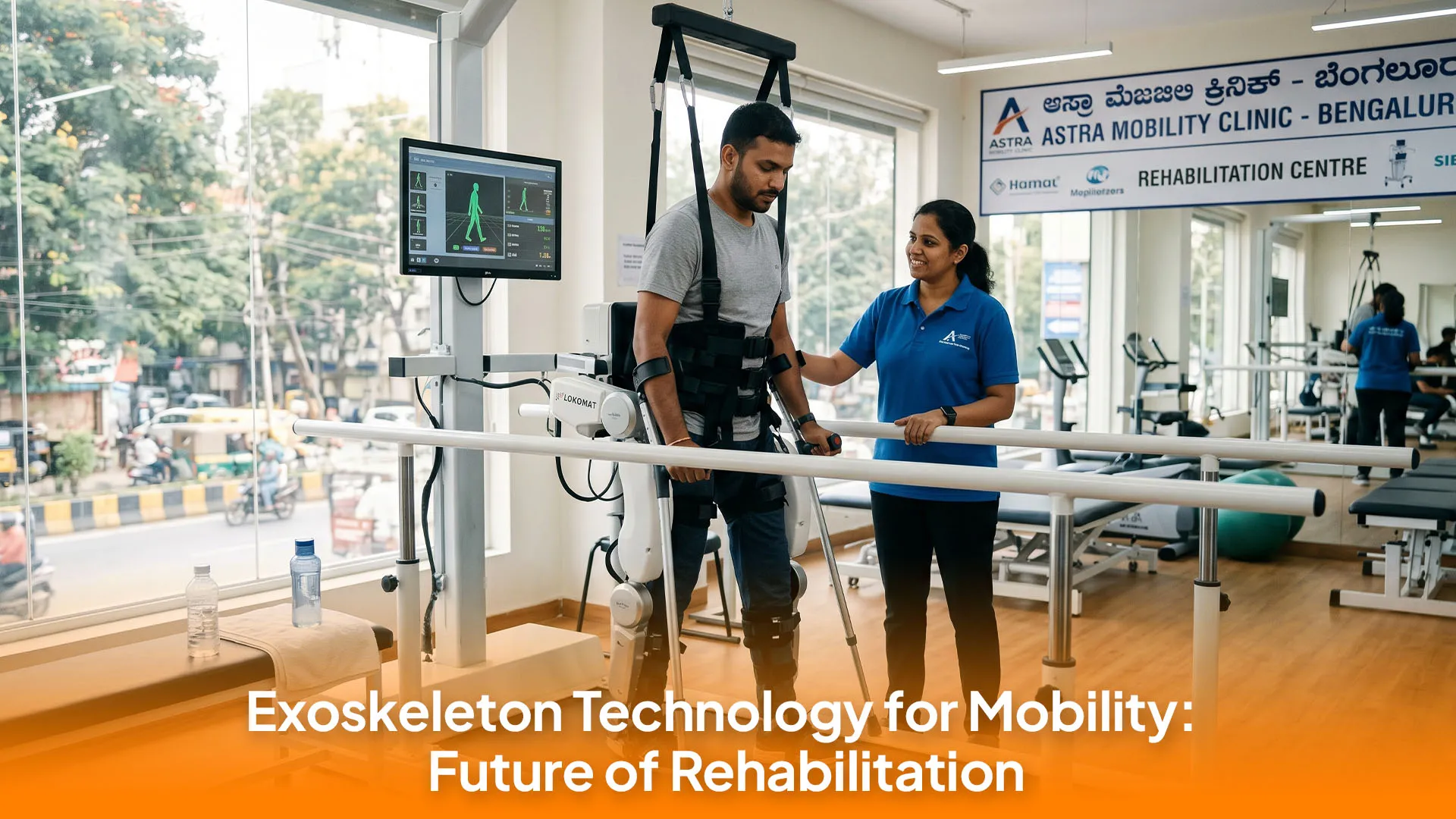
Exoskeleton Technology for Mobility: Future of Rehabilitation
Can a wearable frame help a person stand, step, and train better after injury? That question now drives serious clinical interest in exoskeleton technology for mobility, especially when therapy teams need more than a wheelchair, walker, or brace. In India, this shift also points to a bigger move toward wearable mobility technology that supports recovery, not just transport.
An exoskeleton does not work like a miracle machine. It works like a guided movement system. Sensors, motors, joint control, and therapist-led settings help users repeat safer steps, hold posture, and train with less manual strain. That is why hospitals, rehab centres, and mobility brands now track this category with sharper focus.
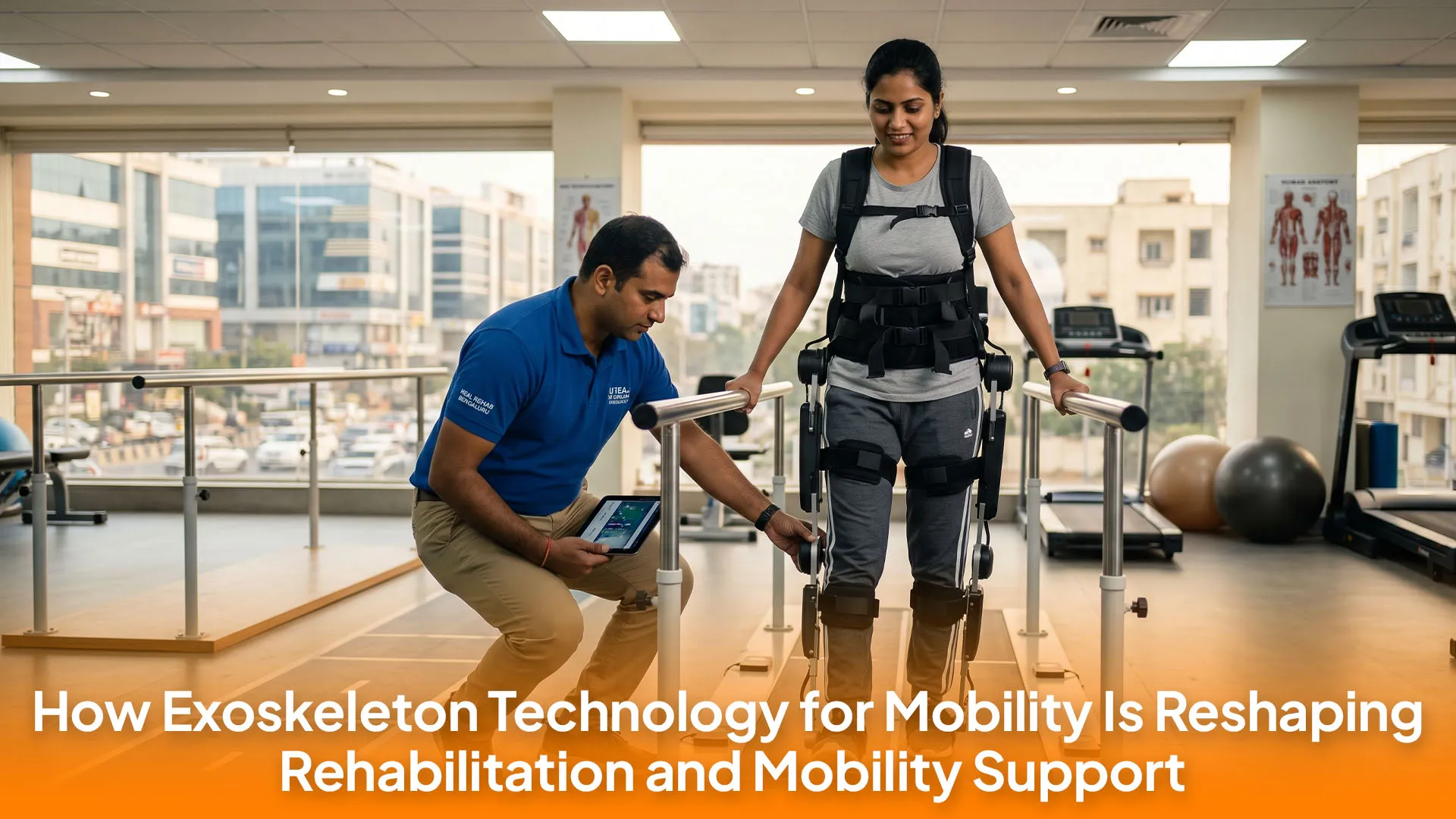
How Exoskeleton Technology for Mobility Is Reshaping Rehabilitation and Mobility Support
It is changing rehabilitation from basic support to guided movement training. Instead of only helping a person move from one place to another, exoskeleton systems help therapists work on gait, posture, balance, and repetition with more control. That shift makes mobility care more structured, more measurable, and more focused on functional recovery.
Assisting Walking Through Sensor-Led Movement Support
The first job of robotic exoskeleton devices is simple. They help the user practise a better gait pattern. The system supports hip and knee motion, triggers step phases, and gives controlled assistance when the user lacks strength or motor control. In this stage, exoskeleton technology for mobility works best as guided practice. It lets therapists shape walking quality instead of only compensating for movement loss.
Lowering Physical Load During Therapy Sessions
Therapy sessions demand effort from both patient and therapist. Repeated manual support can shorten sessions and reduce training consistency. Exoskeleton-guided practice reduces part of that load. Therapists can spend more time on cueing, alignment, and task progression. Patients can often tolerate longer structured sessions when the device carries part of the body load and keeps movement in a safer line.
Improving Balance, Posture, and Step Control
Balance and posture decide whether a step becomes useful or unsafe. Exoskeleton systems help hold the trunk, guide weight shift, and control joint angles during stance and swing. This is where rehabilitation exoskeleton benefits begin to show in a measurable form. Better pelvic alignment, steadier foot placement, and more repeatable steps create cleaner movement patterns for later recovery stages.
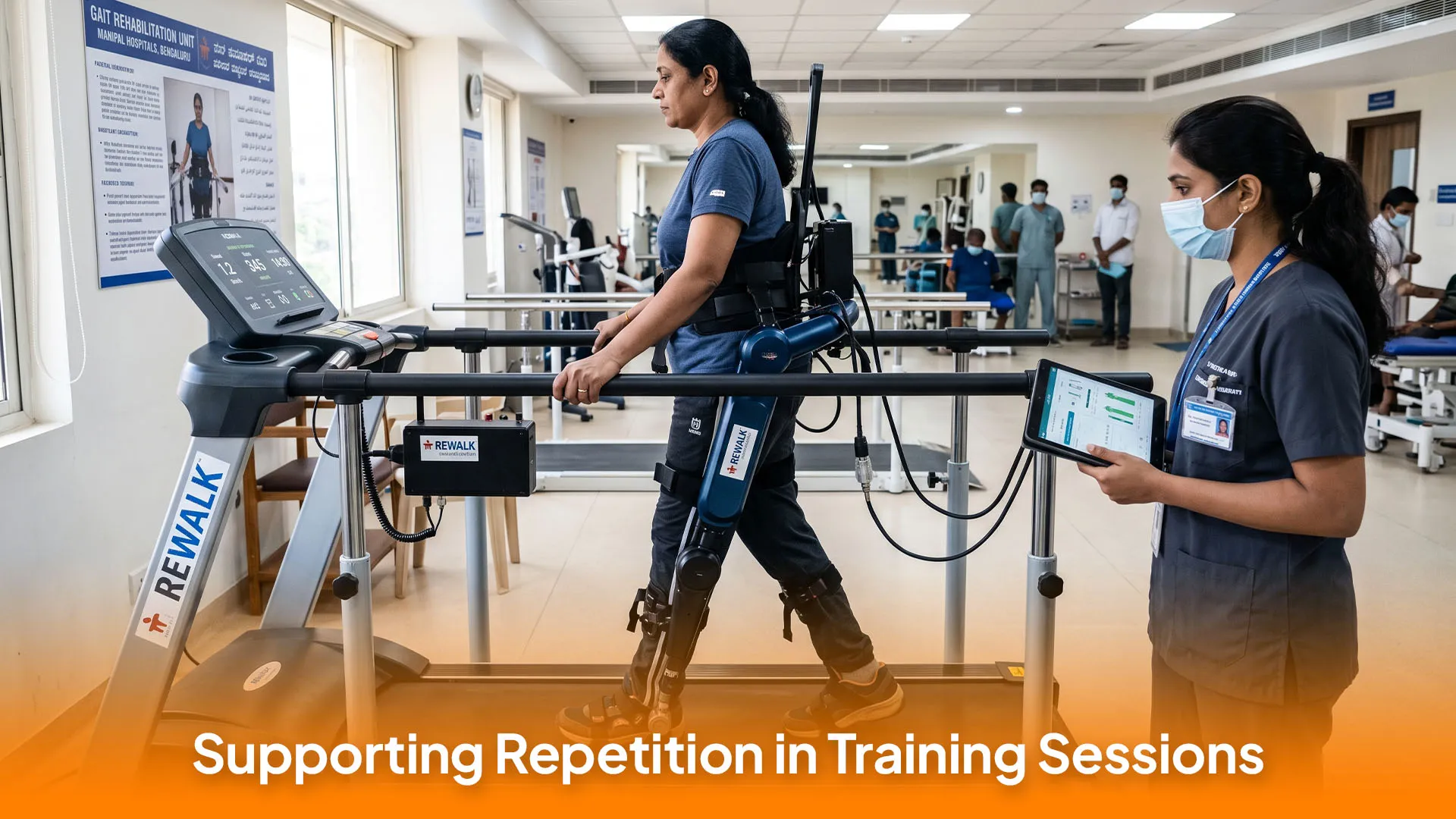
Supporting Repetition in Training Sessions
Good neuro-rehab needs repetition. Not random repetition. It needs repeatable, task-focused work that the team can grade from one session to the next. That is why many clinicians view these systems as an advanced rehab solution when standard gait practice stops giving enough volume.
Rehabilitation use case | What the system supports | Why clinicians value it |
| Stroke recovery | Step initiation, symmetry, knee control | Helps retrain gait with tighter feedback |
| Spinal cord injury rehab | Standing, weight shift, gait cycles | Increases structured practice volume |
| Post-operative retraining | Protected stepping, posture control | Supports early functional re-training |
| Severe weakness cases | Guided movement with reduced load | Makes therapy sessions more tolerable |
The table shows where rehabilitation exoskeleton benefits become practical, not theoretical.
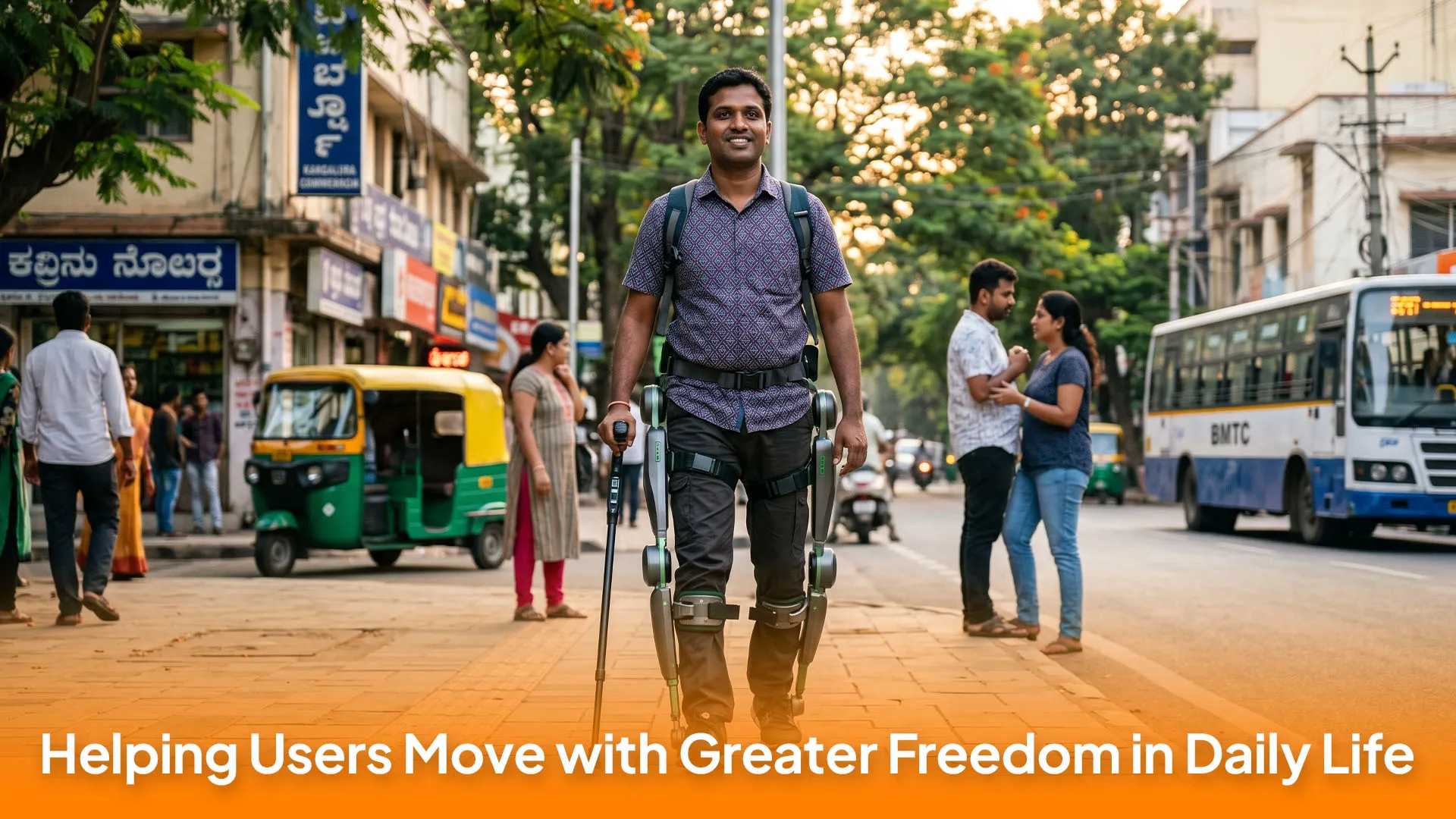
Helping Users Move with Greater Freedom in Daily Life
No device improves daily function on its own. The goal is transfer of skill. When users train well, they may manage standing tasks, short supervised walks, or safer transfers with less dependence. For that reason, exoskeleton technology for mobility should connect with seating, orthotics, home access, and follow-up therapy. That wider plan turns session gains into daily use.
Bringing Data-Led Adjustments into Mobility Care
Good rehab depends on good decisions. Newer systems track step count, joint range, symmetry, loading, and session tolerance. That data helps teams decide whether to increase support, reduce support, or change task goals. In practice, exoskeleton technology for mobility gives therapists a tighter feedback loop than guess-based progression. That improves prescription quality across the care plan.
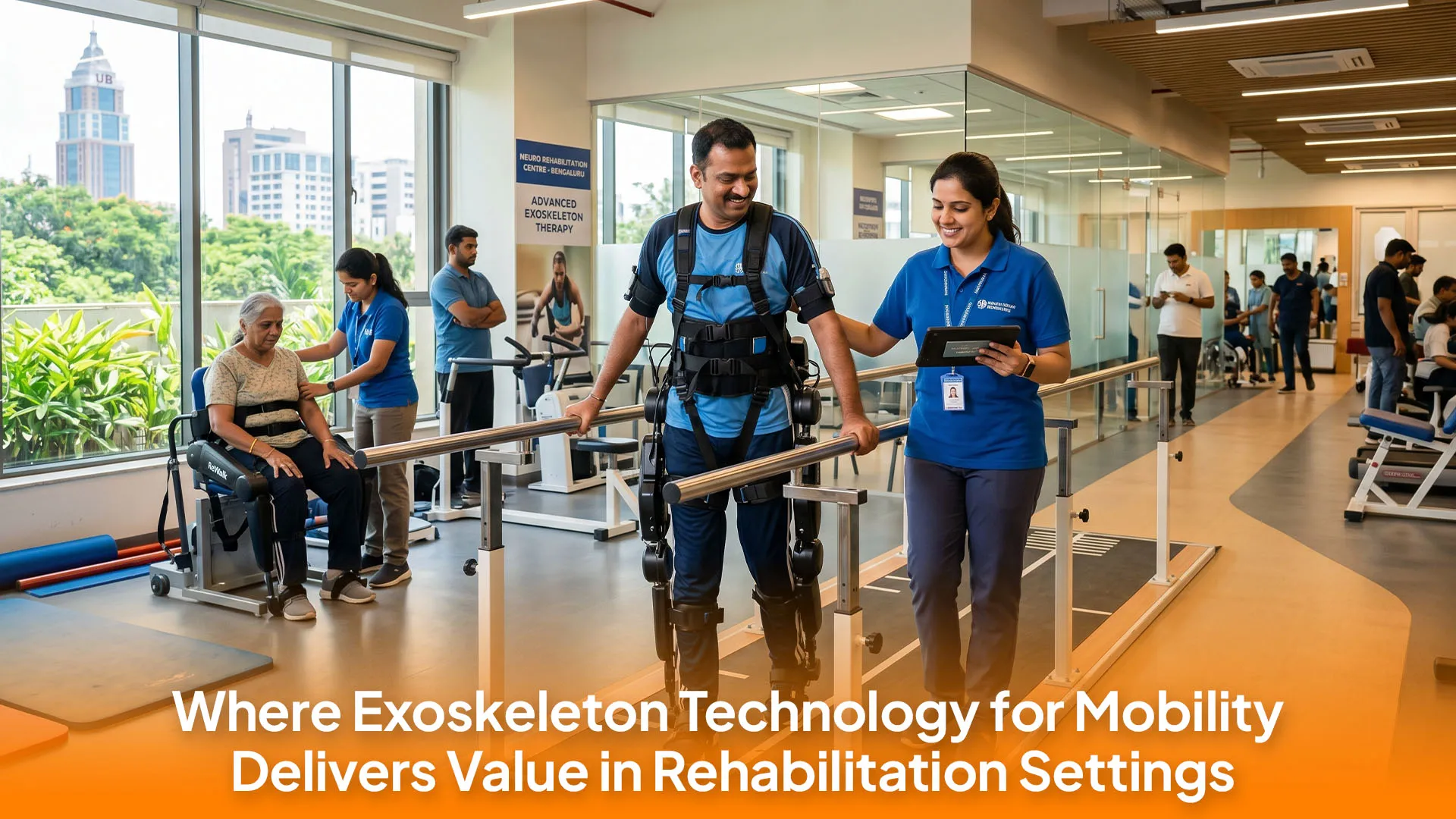
Where Exoskeleton Technology for Mobility Delivers Value in Rehabilitation Settings
Value appears when the clinical goal stays specific. Stroke recovery, spinal cord injury, incomplete paralysis, post-operative gait re-training, and selected neuromuscular cases can all benefit when patient selection stays strict.
The strongest gains appear when the device fits a narrow goal, a defined patient profile, and a supervised pathway. Centres that buy on novelty alone often struggle. Centres that tie device use to therapy metrics, staffing, and discharge planning usually get better value.
Barriers Affecting Wider Adoption in India and Global Markets
The barriers remain serious. Cost still blocks many centres. Clinical teams need training. Users need screening, fitting, and follow-up. Service access, spare parts, and maintenance also shape adoption. In smaller cities, even referral pathways remain thin. So the market will not grow on technology appeal alone.
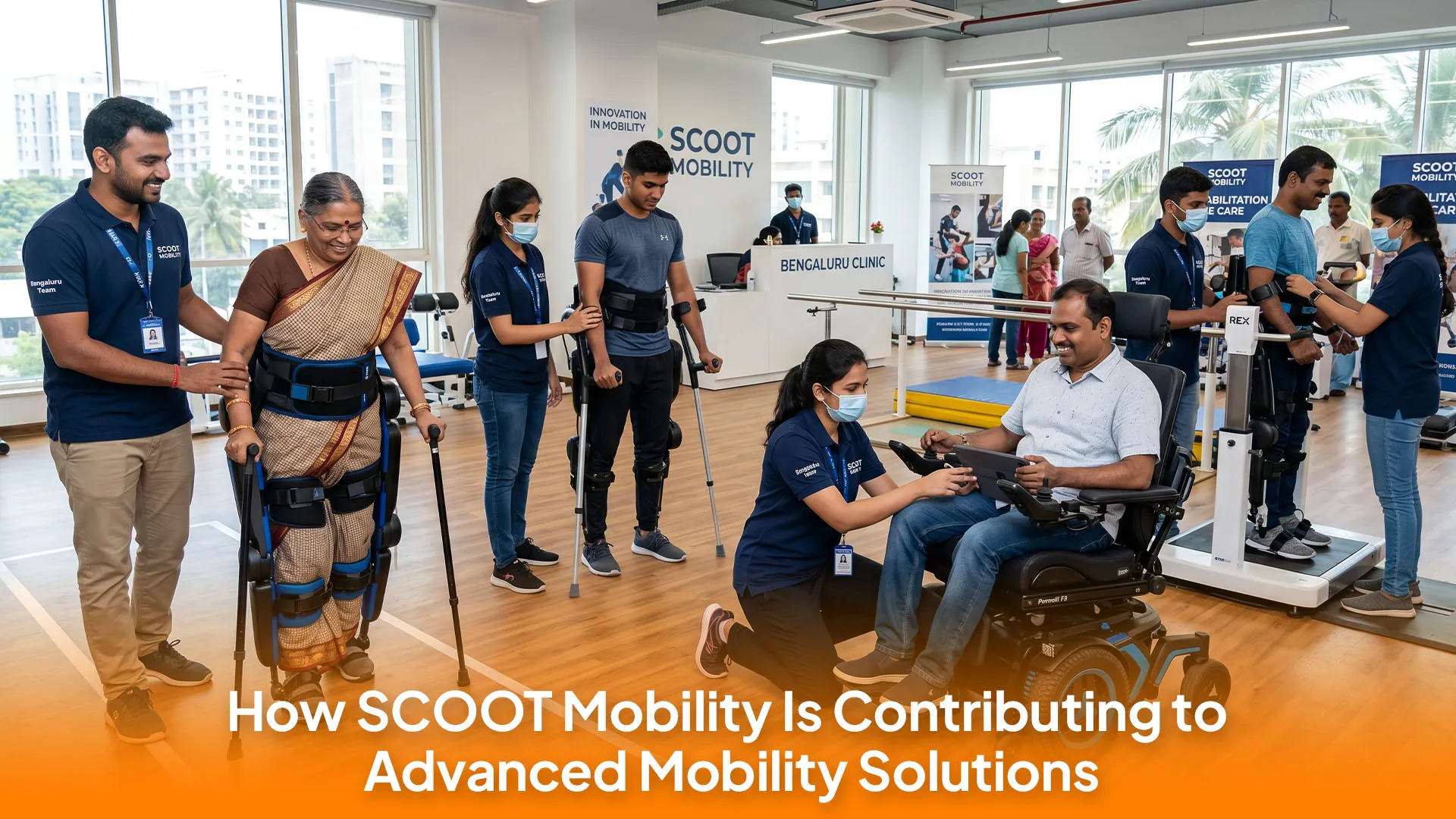
How SCOOT Mobility Is Contributing to Advanced Mobility Solutions
At SCOOT Mobility, we do not treat robotics as a separate conversation from daily mobility. We connect seated mobility, standing support, gait training, and access planning in one pathway. We also look at the user’s posture, transfers, home layout, and long-term function before the technology choice.
- End-to-end mobility ecosystem across wheelchairs, rehab aids, robotics, accessibility, and transport
- Clinical customisation for spinal cord injury, neurological cases, and posture-led mobility needs
- Wider lifestyle support through consultation, home or office modification, vehicle adaptation, and mobility planning
At SCOOT Mobility, we bridge passive mobility and active movement support. That position gives families and clinicians one place to evaluate wearable mobility technology, seating, transfer support, and a full advanced rehab solution path instead of buying disconnected products.

Conclusion: The Next Stage of Rehabilitation Technology
The next phase of rehabilitation will not belong to one device. It will belong to better pathways, better screening, and tighter coordination between therapy and mobility planning. When used well, exoskeleton technology for mobility can support gait practice, reduce therapist strain, and create a stronger bridge between clinical training and daily function.
For families, clinicians, and rehab buyers in India, the right question is not whether robotics sounds impressive. The right question is whether the device fits the person, the goal, and the care setting. If you want one mobility partner that can connect wheelchairs, rehab aids, access solutions, and robotics in a single pathway, start that conversation with SCOOT.
FAQs
What is exoskeleton technology in mobility care?
It is a wearable robotic support system that guides standing, stepping, posture, and task-based gait training during supervised rehabilitation sessions.
Who can Benefit from robotic exoskeleton devices?
People with stroke, spinal cord injury, weakness, or gait loss may benefit when clinicians confirm fit, goals, tolerance, safety first.
How does exoskeleton therapy improve rehabilitation?
It increases guided repetition, supports alignment, reduces therapist strain, and helps teams measure progress through cleaner, more consistent movement patterns.
Is Exoskeleton technology safe for daily use?
Safety depends on assessment, fitting, supervision, skin checks, battery reliability, and the user’s strength, balance, cognition, home demands, goals.
What is the feature of wearable mobility devices?
Good devices combine body support, adjustability, sensor feedback, comfort, battery efficiency, and simple controls that match therapy goals and users.